Kumana National Park Photography Safari from Arugam Bay
Kumana National Park photography was the main wildlife experience I wanted to do from Arugam Bay. I had already spent time photographing the coast, Elephant Rock, the countryside around town and Pottuvil Lagoon, but Kumana felt like the big one.
Arugam Bay itself is a great base for surf, beach life, lagoons, birds, crocodiles and elephants close to town. I have written about that side of the trip separately here:
This post is about the Kumana side of the story: choosing a safari, what it was like photographing from the vehicle, the wildlife I saw, and whether I think Kumana National Park is worth it for photographers.
Quick Guide to Kumana National Park Photography
Best subjects:
Leopards, elephants, crocodiles, water buffalo, deer, bee-eaters, kingfishers, Oriental Darters, herons, egrets and other wetland birds.
Best experience:
A full-day safari if wildlife photography is the priority. It gives more time in the park and more chance of reaching different areas.
Best setup:
A private or small-group jeep with space to move around and beanbags for long lenses.
Best gear:
A long wildlife lens plus a mid-range zoom. I used the Nikon Z 180-600mm and Nikon Z 24-120mm f/4.
Biggest challenge:
The best sightings do not always happen in the best light. Midday can be harsh, and the park closing time can mean leaving just as the evening light improves.
Choosing a Photography-Focused Kumana Safari
The main thing I wanted to do from Arugam Bay was a safari in Kumana National Park.
I had never been on a safari before, and when I tried researching wildlife photography in Sri Lanka, most of what I found online was either general travel advice or expensive full-country tour packages. There was not much useful information for someone already in Arugam Bay who wanted a good photography-focused safari for a reasonable price.
One useful thing I did find was that joining a full jeep can make photography harder. If the vehicle is full, you are often stuck in one seat and cannot move around for a better angle. For wildlife photography, being able to shift position matters. A private jeep, or at least a small group, seemed like the better option.
The problem was that I was travelling alone.
It was also quiet season, and Arugam Bay was even quieter than usual. There were not many people in the guesthouse I was in, and no one obvious to share the safari with.
I kept searching for a company that seemed suited to photography. Most had great reviews, but almost all Sri Lankan tourism businesses seem to have great reviews, so that was not very helpful. What I really wanted was some sign that they understood photography.
Eventually I found a mention of a company called Jackal & Co Safaris. They did not have a proper website, just Instagram and Facebook, which seems fairly normal in Sri Lanka. But they talked about their modified Hilux being designed for better viewing and photography. It had open sides, lower shooting angles, and bars instead of solid walls so you could shoot from a lower position.
That caught my attention.
Getting lower usually makes better wildlife images. One thing I had wondered about was whether being high up in the back of a jeep would make all the images feel like they were looking down at the animals.
I contacted them and asked about options. I was originally thinking of doing two half-day safaris, one in the morning and one in the afternoon, for the best light and two chances at leopard sightings. But they suggested a full-day private safari. They said a full day would allow us to go much deeper into the park and increase the chances of seeing different animals.
They also gave me a tempting price.
So I went for the full day.
Kumana National Park Safari for Wildlife Photography
The next morning I was picked up from Arugam Bay and we drove about an hour to Kumana National Park.
The vehicle was huge. It could probably fit around ten people, so being the only person in it felt a bit ridiculous, but also pretty great. They had beanbags for resting the camera and lens on the bars of the vehicle, which made a big difference with the 180-600mm lens.
The guide explained that they were a relatively new company. The driver had long experience in the area, and the guide had worked as a zoologist. His knowledge was excellent, but what stood out more was his passion. He clearly cared about the animals, the park, and the smaller details.
Kumana is known especially for wetlands and birds, but it also has elephants, crocodiles, sloth bears and leopards. It borders the more famous Yala National Park. Yala is better known for leopard sightings, but it is also famous for heavy jeep traffic and many vehicles chasing the same animals.
That did not sound very appealing to me.
Kumana felt like the better choice. It is harder to reach from the main tourist areas, so it sees less traffic. There are still jeeps, and guides do stop and share information, but it did not feel like the same kind of safari traffic jam I had heard about in Yala.
Bee-eaters and Missed Shots
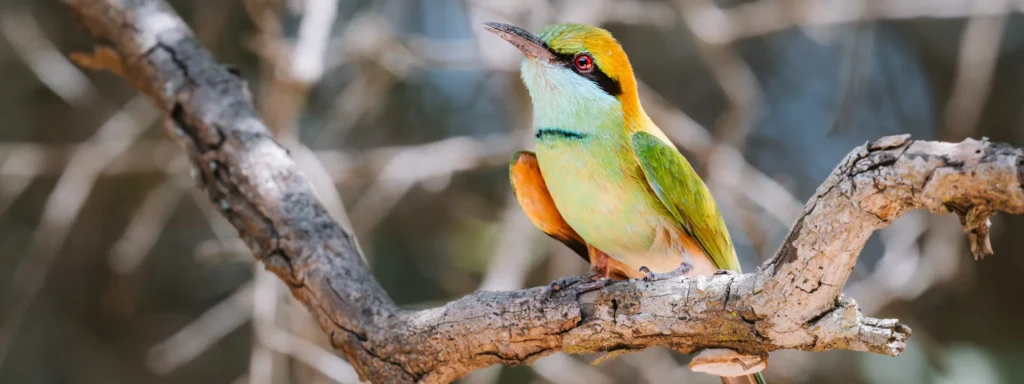
Soon after entering the park we stopped for bee-eaters. They were colourful, fast, and difficult to photograph. I was fascinated to learn that they nest in holes in the ground rather than in trees.
We parked near a nest entrance and waited. A bird had gone inside, so I aimed the camera at the hole and waited for it to come out. Sure enough, it stuck its head out, and I got a few quick frames.
Then it flew.
And I missed the better shots.
I had forgotten to switch my Nikon Z8 from animal detection to bird detection, and I had not set up the camera properly for such a fast exit. In hindsight I should have used a higher frame rate, maybe even pre-capture, even if that meant shooting JPEG. Lesson learnt. Wildlife gives you plenty of those.
Leopard Photography in Kumana
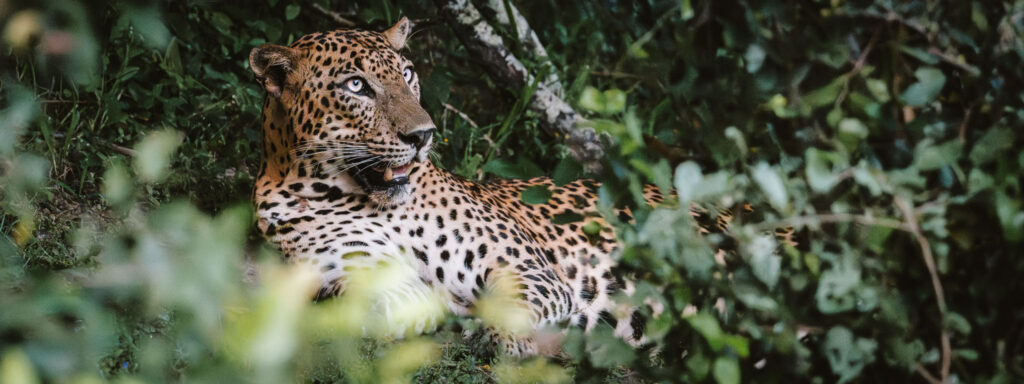
Not long after that we saw our first leopard.
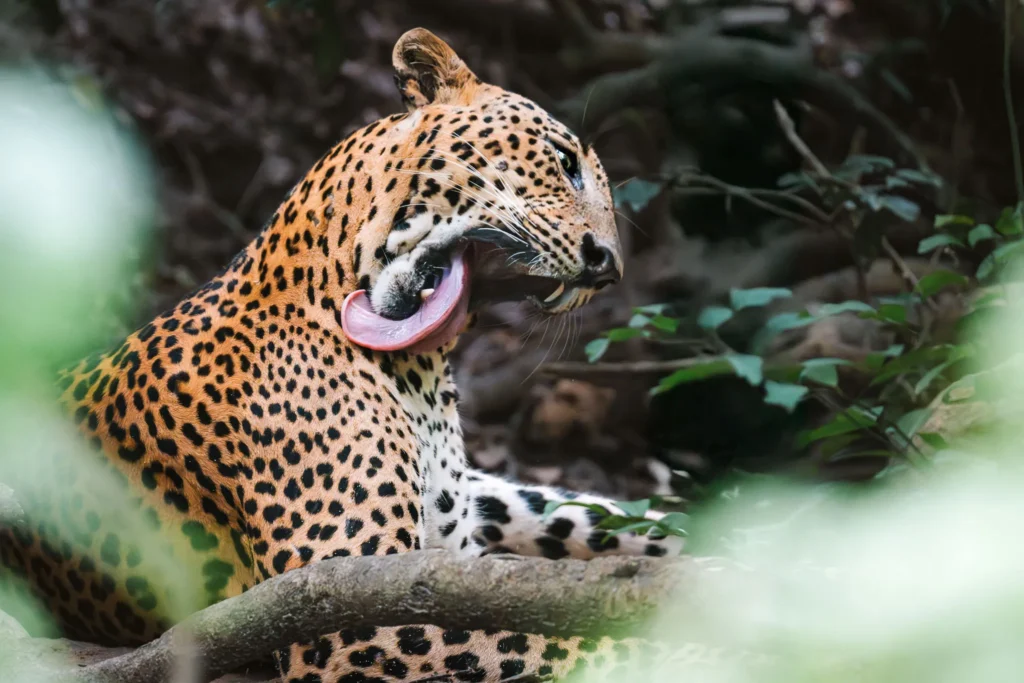
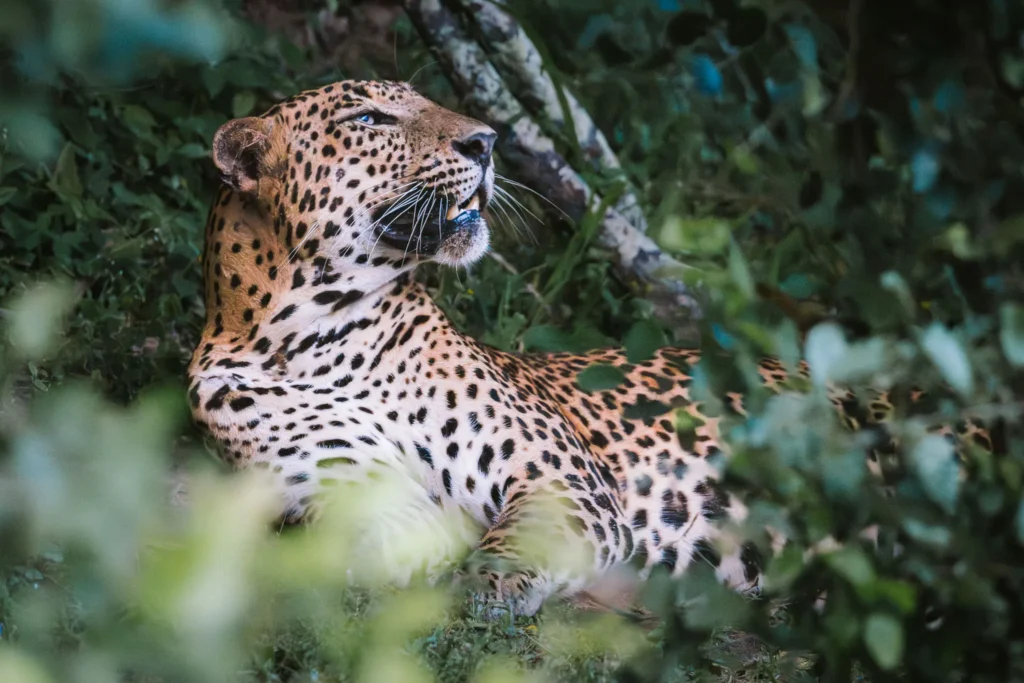
There were already several other jeeps there, maybe five or six, each taking turns in the best position. The leopard was lying in the bushes about 10 to 15 metres away, licking itself and occasionally lifting its head. Apparently, just before we arrived there had been a second leopard there too, and they had fought.
That would have been something to see.
The leopard was partly framed by branches, which actually worked quite well. When it turned its head or looked in our direction, I was able to get some nice close portraits. But they were still the usual kind of leopard portraits. What I really wanted was a wider image with more environment and story.
That was harder to get.
This was one of the main challenges with leopard photography in Kumana. Seeing a leopard is exciting, but making a really interesting photo is another thing. If the leopard is lying in bushes beside the road, the photos can easily become tight portraits with not much context. That is still amazing to see, but it was not quite the image I had in my head.
After a while, we moved on and headed deeper into the park towards the coast.
Birds, Buffalo and the Cinnamon Bittern
Near a wetland we briefly spotted wild boar. The guide was very excited to see them because swine flu had apparently hit the population badly. They were quite far away, but I managed a few frames before they disappeared into the bush.
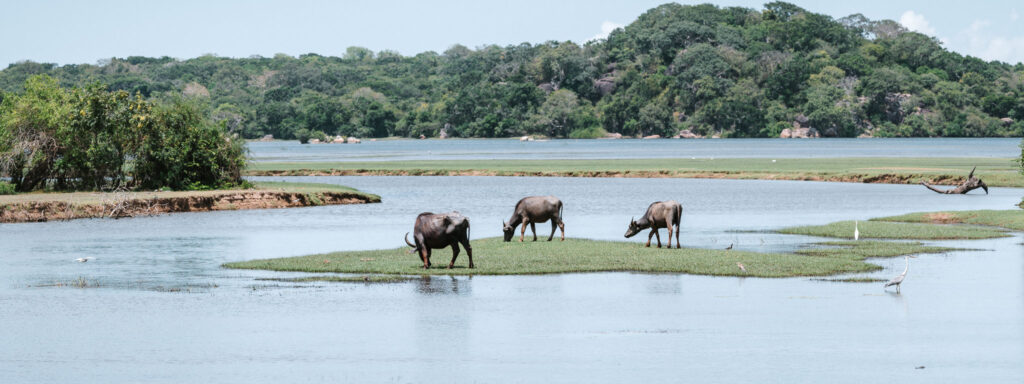
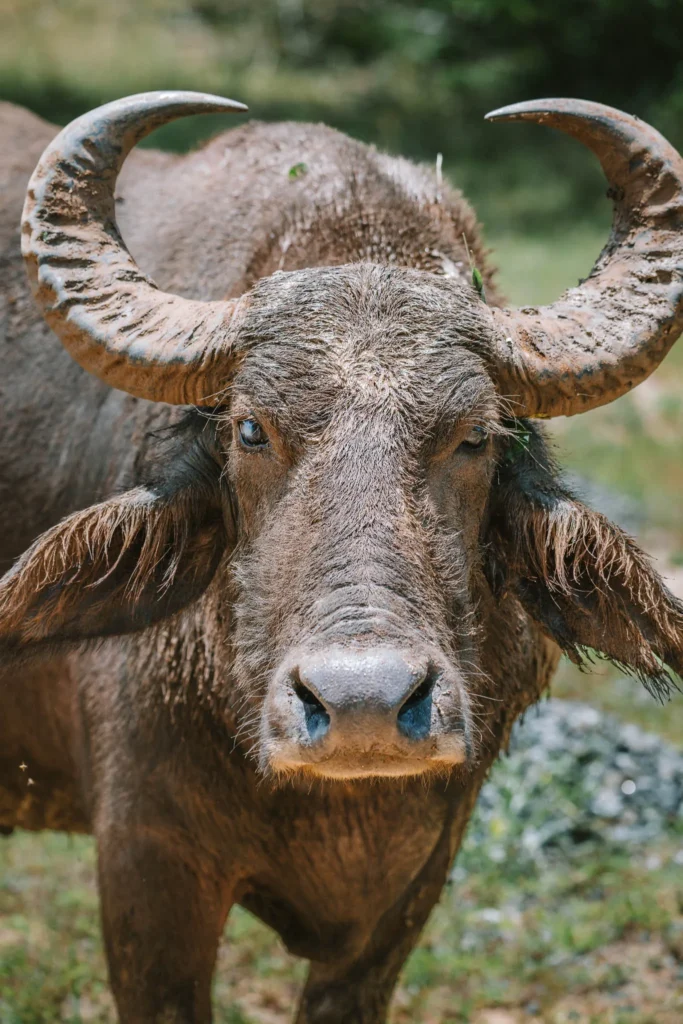
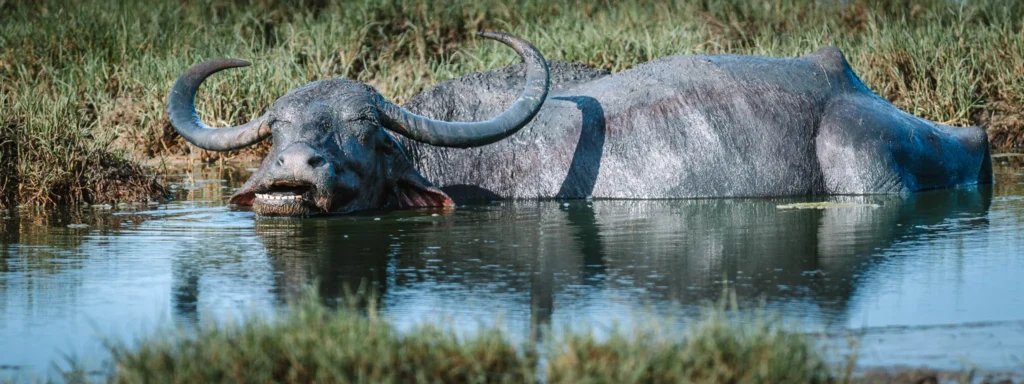
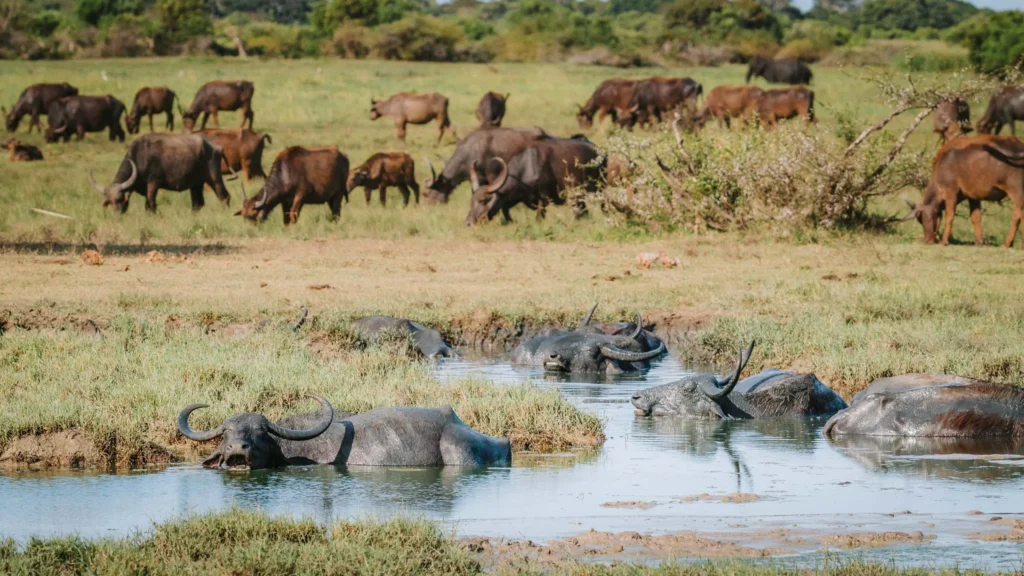
We also saw water buffalo almost everywhere there was water. Most of them were doing exactly what I wanted to do in the heat: standing in water or mud and cooling down.
Later we reached the coast and stopped in the shade for fresh coconuts. Sitting there drinking coconut water during the heat of the day was pretty good.
On the way back into the forest, beside a small creek, the guide spotted an unusual bird. He became genuinely excited. At first, he was not even sure what it was because he had not seen one there before. I managed a few photos before it disappeared.
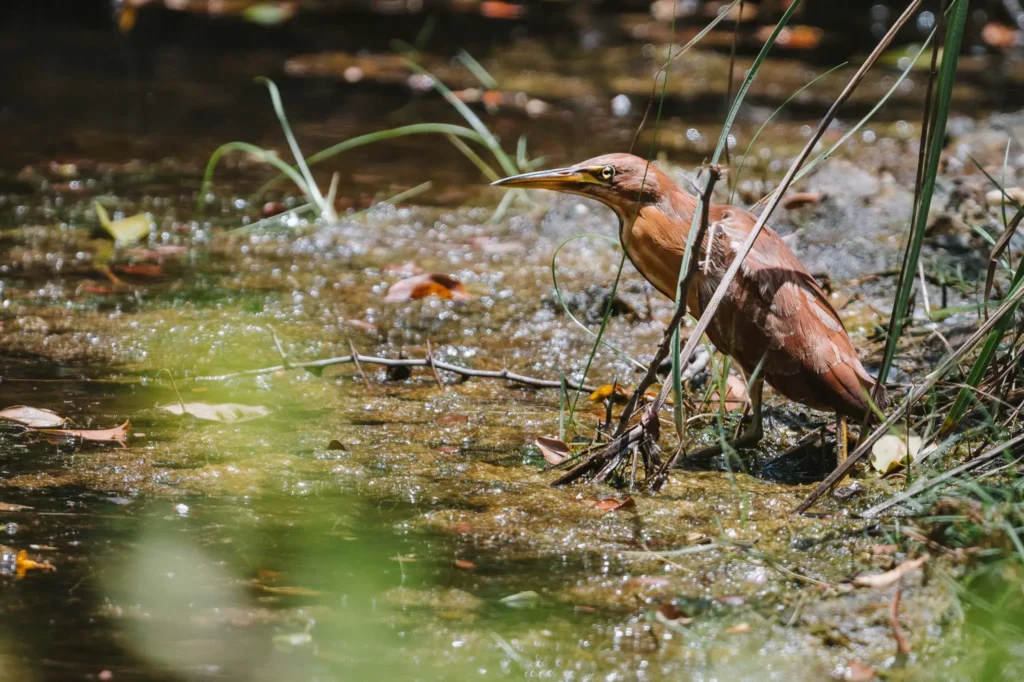
Later, after checking and confirming with someone else, it turned out to be a Cinnamon Bittern. The guide said it was the first one he had ever seen in Kumana.
That made the sighting feel pretty special.
It was not the biggest or most dramatic animal of the day, but it was one of the most memorable. It was also exactly the kind of sighting I would have missed completely without a good guide.
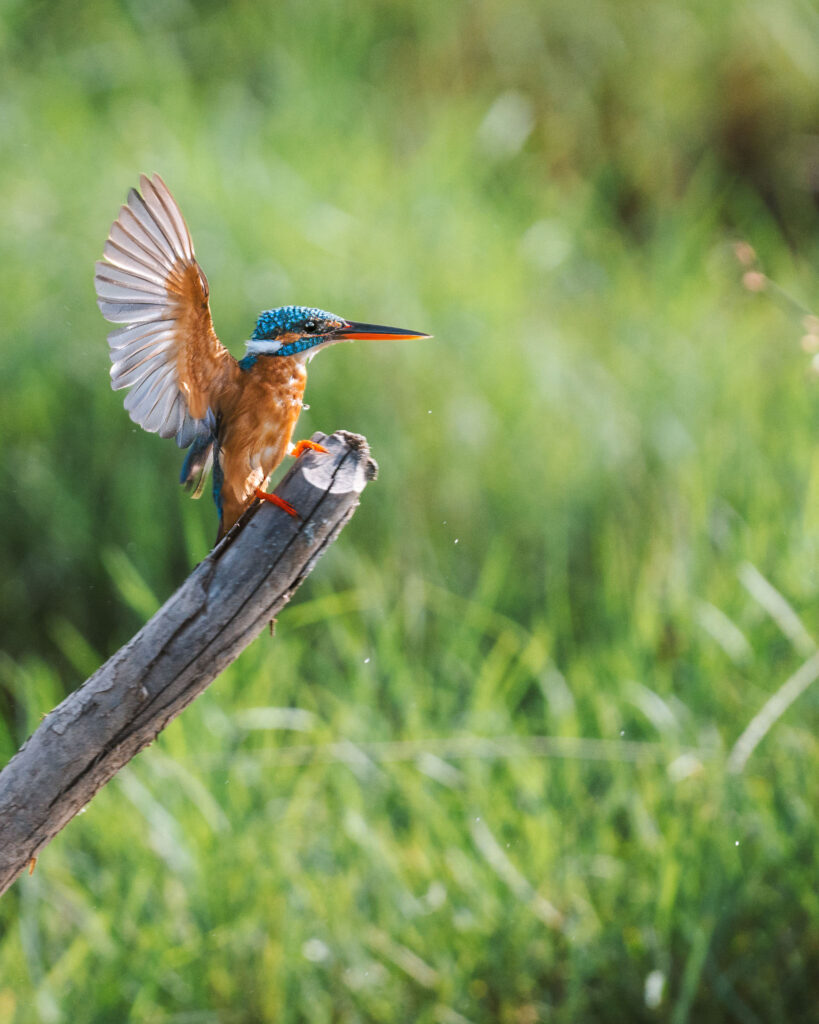
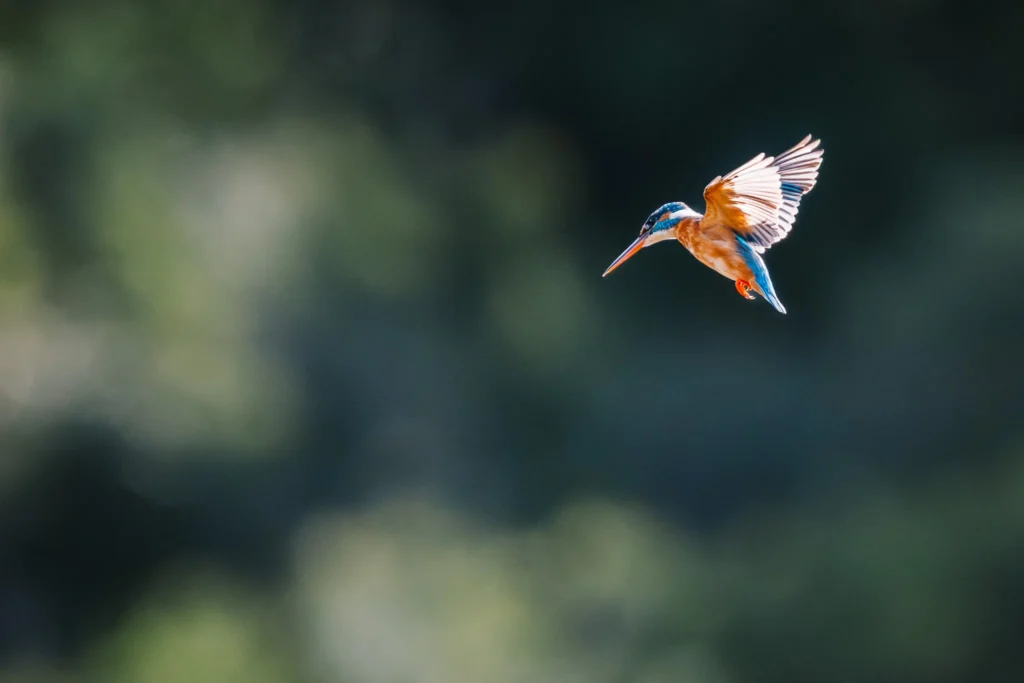
We continued through the wetlands, seeing plenty of birds along the way. I photographed a kingfisher hunting for food and an Oriental Darter, also known as a snakebird. The darter was swimming with its body submerged, so only its long neck and head were sticking out of the water. It looked just like a moving stick, or a snake slipping through the pond.
Elephants, Crocodiles and Harsh Midday Light
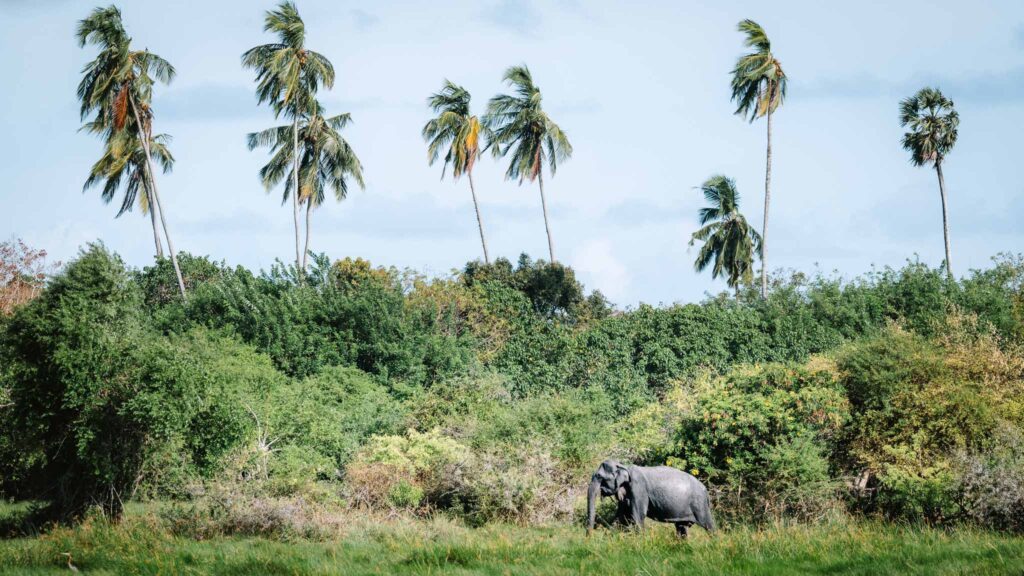
On the far side of some lakes we also saw elephants. These made better wider wildlife images, but by then it was the middle of the day and the light was harsh. Still, it was good to see them in the landscape rather than just as tight close-ups.
We stopped for lunch at a tower overlooking a wetland. The curry and rice was delicious, although I am fairly sure it had been cooked much earlier and sat warm until lunch. Unfortunately, it caused some stomach issues later.
Still, the lunch spot itself was great.
We rested there through the midday heat. The light was harsh, the animals were not very active, and it was too hot to do much except sit in the shade and wait for the afternoon.
Around 3pm we started moving again.
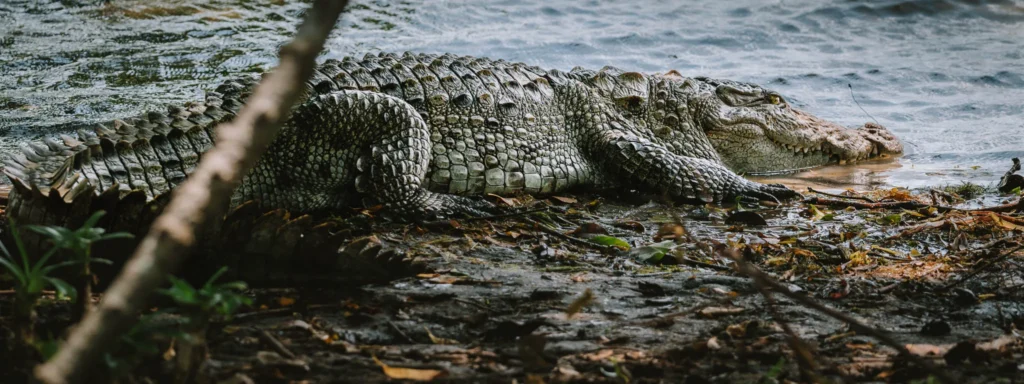
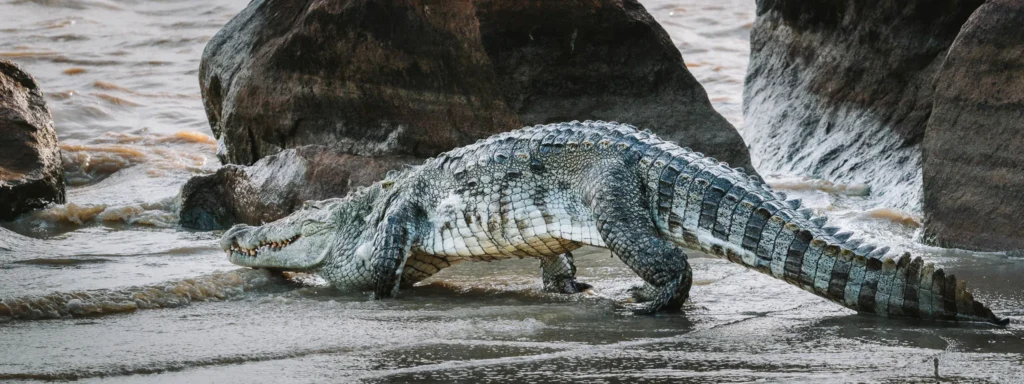
We found more mugger crocodiles around the lakes, and this time some were actually out of the water, which made them easier to photograph. The light was still harsh, but it was better than trying to photograph only eyes and nostrils above the surface.
We also passed an area with large rocks beside a lake. I was told this was a good place for leopards. If one had come out and sat on the rocks, it would have made a much more interesting image than a leopard hidden in bushes beside the road.
But wildlife does not care about my shot list.
Later we found a large elephant standing in the bush close to the road. I still had the 180-600mm lens on, which was too long for the situation. I was too lazy to switch to the 24-120mm, so I photographed a vertical panorama instead, moving across the elephant in sections and stitching it together later. It should make a huge high-resolution file.
One More Leopard Before Closing Time
As we started heading back towards the gate, we came across another leopard.
Again there were several jeeps there, each taking turns. This leopard was also close, sitting in the bushes near the side of the road. At first the images were similar to the earlier leopard: nice portraits, but not the wider environmental photo I was hoping for.
Then, as it got closer to closing time, the other jeeps began to leave.
Once things quietened down, the leopard stood up, crossed the road in front of us, and moved into a slightly more open area. The light was starting to get better too. For a short moment everything came together better than it had earlier in the day.
I got some photos I was happy with, although still not the wide, storytelling leopard image I have in my head.
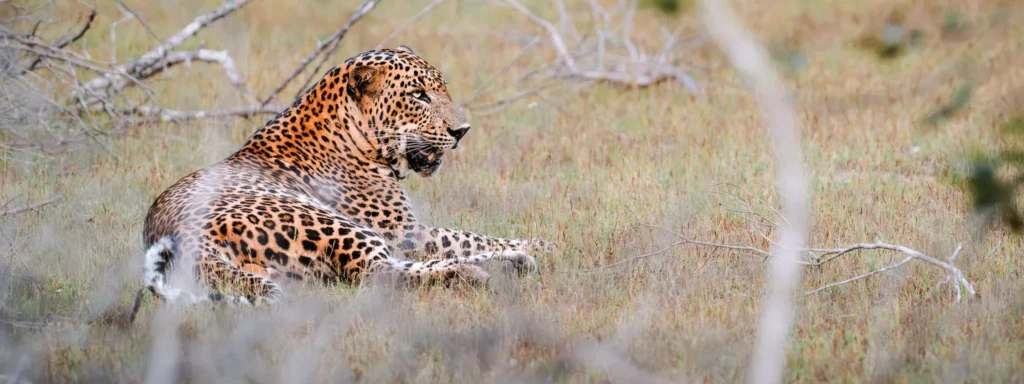
The frustrating part was that the best light of the day was arriving just as we had to leave. The park gates close at 6pm, so there was no option to stay. We drove out through beautiful evening light, seeing sambar deer and spotted deer along the way, while I sat there wishing we could stop for longer.
After leaving the park, we went to the beach, had more fresh coconuts, and watched the sunset. It was a pretty good end to the day.
On the drive back after dark, they used a spotlight to look for nocturnal animals, but we did not find anything. That would have been a nice bonus, but the day had already been excellent.
For photographers, I had a really good experience with Jackal & Co Safaris. The vehicle was well set up, the guide knew his stuff, and they understood that photography is not just about rushing from one animal to the next. I just wish they had a proper website, because they were not easy to find.
Camera Gear for Kumana National Park Photography
For the Kumana safari I mainly used my Nikon Z8 with the Nikon Z 180-600mm and the Nikon Z 24-120mm f/4.
That combination worked really well.
The 180-600mm was essential for the safari. It gave me the reach I needed for leopards, birds, crocodiles and distant elephants. It is not a small lens, but from the safari vehicle it was very manageable, especially with beanbags to support it.
The 24-120mm was useful for wider wildlife photos, landscapes, and scenes where I wanted to show more of the environment. I did not always switch lenses when I should have, which is how I ended up doing a vertical panorama of the close elephant instead.
If I went again, I would bring the same main setup. A long wildlife lens and a mid-range zoom is a good combination for Kumana.
Is Kumana National Park Worth It for Photographers?
For me, yes.
Kumana was the highlight of my time around Arugam Bay. The leopards were obviously exciting, but some of my favourite moments were smaller: the Cinnamon Bittern that even the guide had never seen there before, the Oriental Darter moving through the water like a stick, the bee-eaters flying in and out of their ground nests, and the elephants in the wetlands.
Kumana is not a guaranteed easy wildlife photography location. The light can be harsh, animals may be far away or hidden in bushes, and the best sightings do not always make the best photos.
But that is wildlife photography.
Compared with what I had heard about Yala, Kumana felt like a better fit for the kind of experience I wanted. It was quieter, more varied, and less focused only on chasing leopards. The wetlands, birds, elephants and smaller sightings made the day feel more complete.
Final Thoughts on Photographing Kumana National Park
I think Kumana National Park has a lot of potential for photographers, especially if you are interested in more than just leopard sightings. The park has wetlands, forest, birds, crocodiles, elephants, deer, buffalo, and the chance of leopards.
For me, the best part was not just seeing the big animals. It was the mix of everything: the bee-eaters, the Cinnamon Bittern, the Oriental Darter, the crocodiles, the elephants, the heat, the long quiet stretches, and then the sudden excitement when a leopard appeared.
Sri Lanka is not always the easiest place to research online, especially if you are trying to find photography-focused guides rather than generic tours. But that is also part of what made it interesting. A lot of the best moments came from asking around, following leads, and just getting out with a camera.
Kumana may not be as famous as Yala, but for the kind of wildlife photography experience I wanted, it felt like the right choice.
TThis safari was part of a longer stay in Arugam Bay, where I also photographed Elephant Rock, Pottuvil Lagoon, the coast and wildlife around town. You can read that post here:
If you enjoyed this post, feel free to explore more of my photography stories and location guides on the blog. I’ll be adding more from Sri Lanka, Japan, New Zealand and other places as I slowly work through the images and stories from the road.
You can also sign up for my newsletter below if you want new posts, photography notes and occasional behind-the-scenes updates sent straight to your inbox.