Arugam Bay Photography Guide
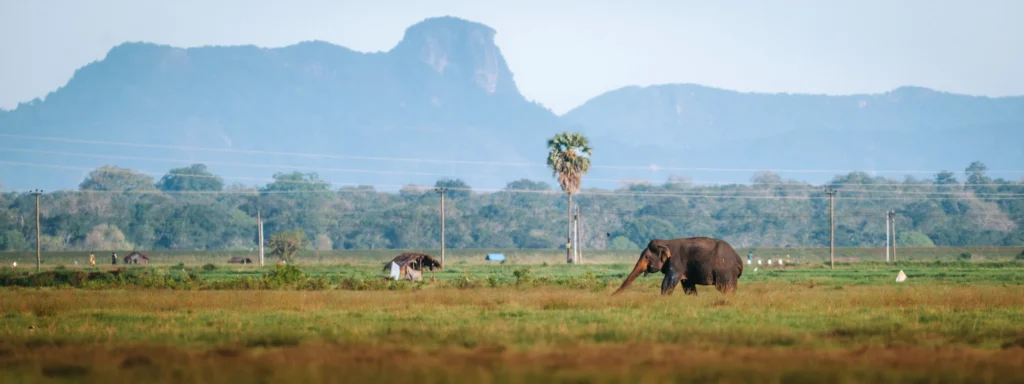
Arugam Bay photography is not just about surf. Although Arugam Bay is best known as Sri Lanka’s east coast surf town, for photographers it has a lot more going on than waves. Within a short distance of town there are rice paddies, lagoons, elephants, crocodiles, colourful birds, and Kumana National Park, one of the best wildlife areas in Sri Lanka.
That mix is what drew me there.
In late April into early May, I was lucky enough to have some time to travel through Sri Lanka. After a long, cold winter in Japan, I was more than ready for warmth, ocean, and a bit of time outside in a completely different landscape. I had heard Sri Lanka was full of forests, wildlife, beaches and national parks, which sounded ideal for photography. I had also heard the surfing was good.
That sounded like a pretty good combination to me.
After a few days exploring Colombo, I headed east to Arugam Bay. The timing was right at the very start of the east coast surf season. It was not fully firing yet, and most of the other breaks still needed more swell, but Main Point was starting to work and was consistent enough to get in the water most days.
When I was not surfing, I was usually walking around with a camera, looking for wildlife, or trying to figure out how to get into the surrounding lagoons and countryside. Arugam Bay ended up being more than just a surf stop. It became a base for photographing elephants near the road, birds and crocodiles around Pottuvil Lagoon, sunset landscapes from Elephant Rock, and eventually a full-day safari in Kumana National Park.
This post is about the Arugam Bay side of the trip: the beach, Elephant Rock, the countryside around town, and Pottuvil Lagoon. I have written about the Kumana safari separately here:
Kumana wildlife photography guide.
Quick Photography Guide to Arugam Bay
Best subjects:
Surf, beach life, Elephant Rock landscapes, fishing boats, elephants, crocodiles, monkeys, birds, Pottuvil Lagoon, rice paddies and tuk tuks.
Best wildlife option near town:
Pottuvil Lagoon at sunrise. It is good for birds, elephants, reflections and slower wildlife photography from a small boat.
Best sunset spot:
Elephant Rock. Easy to reach by tuk tuk, with coastal views, foreground rocks, beach scenes and sometimes surf below.
Best gear:
A long wildlife lens plus a mid-range zoom. I used the Nikon Z 180-600mm and Nikon Z 24-120mm f/4, which covered almost everything.
Biggest challenge:
The light changes quickly, and midday can be harsh. Start earlier than you think.
What This Post Covers ???
This post is part Arugam Bay photography guide and part travel story. I’ll cover what Arugam Bay is like for photography, photographing Elephant Rock, exploring the countryside around town, doing a sunrise boat safari on Pottuvil Lagoon, and the camera gear that worked best for me.
It is not a complete location guide to every possible photo spot around Arugam Bay. It is based on my own time there in late April into early May, right at the start of the east coast surf season.
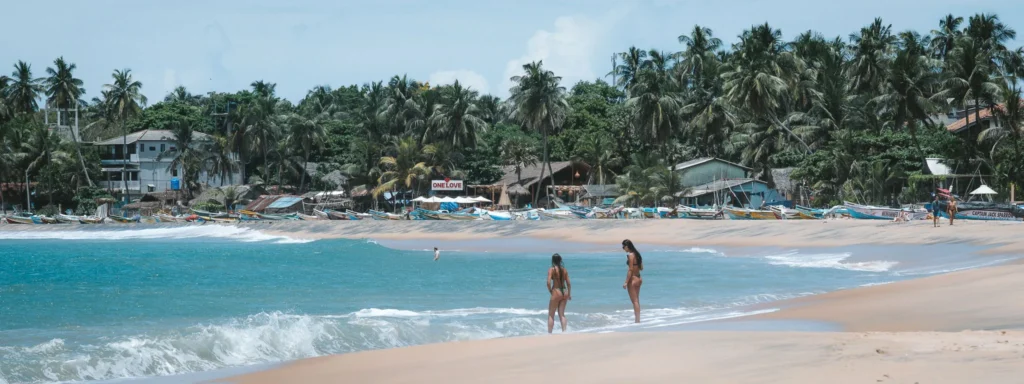
Is Arugam Bay Good for Photography?
Yes, but maybe not in the obvious way.
If you are expecting dramatic mountain landscapes, big waterfalls, or polished travel photography locations, Arugam Bay is not really that. It is more interesting as a place where surf, wetlands, farmland, wildlife and everyday Sri Lankan life all overlap.
For photographers, the main subjects around Arugam Bay are surf, beach life, elephants, crocodiles, birds, lagoons, rice paddies, tuk tuks, and nearby Kumana National Park.
The area worked well for me because I like mixing landscapes and wildlife. I am not usually chasing only tight animal portraits. My favourite wildlife photos often include more of the landscape around the animal, because that helps tell more of the story.
Arugam Bay gave me plenty of chances to work like that, even if the light and conditions did not always cooperate.
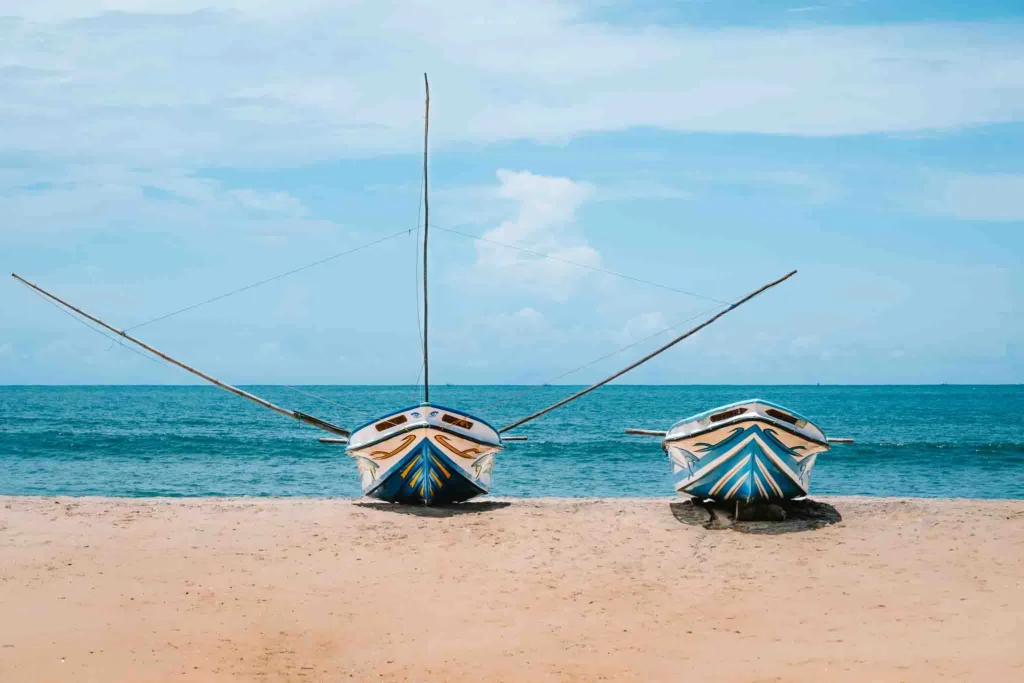
Photographing Elephant Rock and Wildlife Near Arugam Bay
A few days after arriving, I took a tuk tuk out to Elephant Rock for sunset. I also packed my Nikon Z8 with the 180-600mm lens just in case we came across wildlife on the way.
It turned out to be a good decision.
Only a few minutes after leaving town we came across monkeys and peacocks in the rice paddies. My tuk tuk driver seemed surprisingly knowledgeable about the wildlife, which made the drive more interesting. He was not just taking me from A to B. He was looking around, pointing things out, and clearly knew the area well.
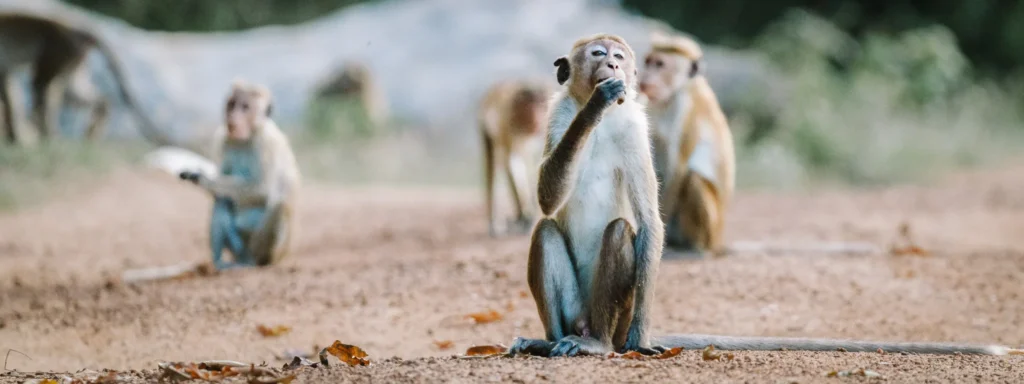
A few minutes later we saw elephants near the side of the road.
We stopped at a decent distance. My driver was excited, but also cautious. You could tell he loved seeing them, but also respected how dangerous they could be. Then some tourists on motorbikes came along and stopped much closer than we had.
They were taking phone photos while the elephant slowly moved closer to the road. My driver started getting visibly worried. The elephant came right up onto the road, looked straight at them, flapped its ears, and then made a short mock charge.
The tourists suddenly realised maybe they were not in the best position.
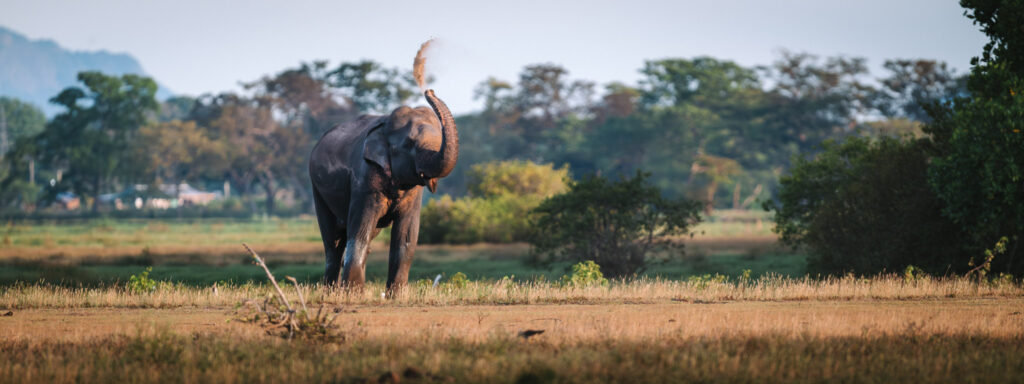
My driver started yelling at them to move back, and they quickly turned around and got further away. Once they had moved, the elephant crossed the road and disappeared into the trees on the other side.
It was one of those moments that was both exciting and a little unsettling. As visitors, it is easy to see elephants as amazing wildlife subjects. For people who live there, the relationship seems more complicated. My driver was clearly happy to see them, but he could also read their behaviour and knew when things were starting to get risky.
That was a good reminder not to treat wildlife casually just because it makes a good photo.
After that we continued on to Elephant Rock. The tuk tuk parked at the end of a dirt road, and from there it was only about a ten-minute walk. The first section goes through a little bit of bush, and after seeing elephants nearby, my driver did not want me walking that part alone. He came with me until we reached the open beach.
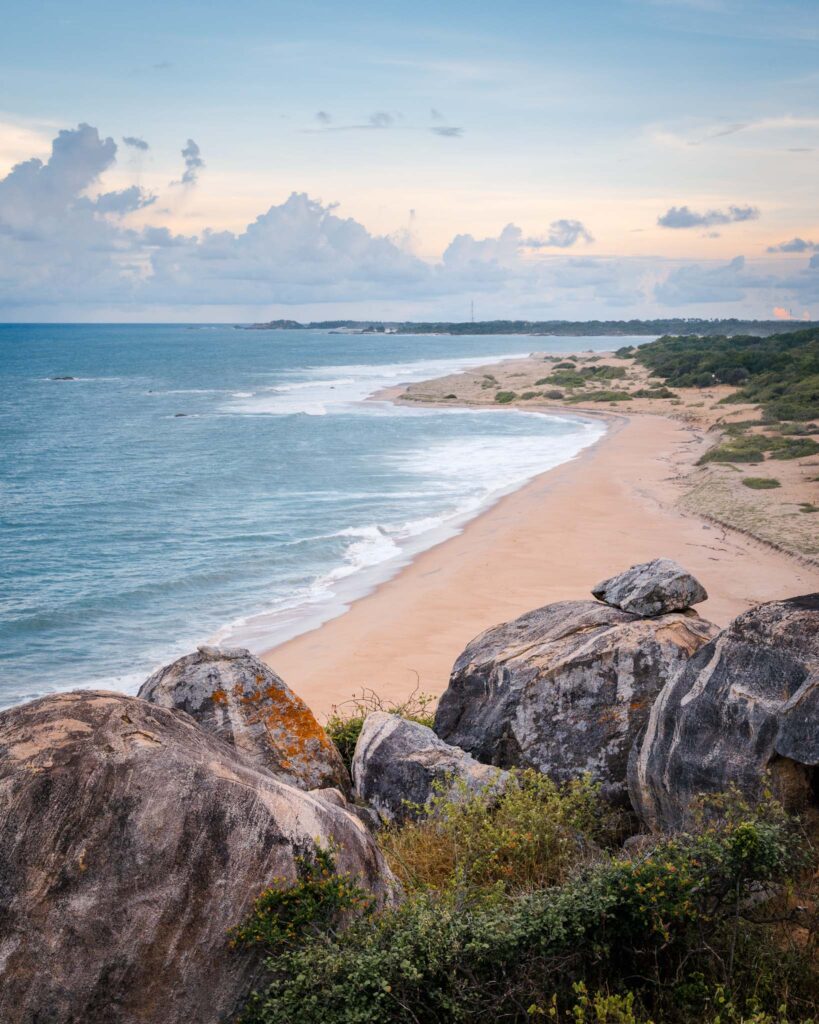
The walk up Elephant Rock itself is easy, and the view from the top is worth it. Even though Arugam Bay was still quiet, there were quite a few people up there for sunset.
I used the Nikon Z8 and 24-120mm lens for most of this section. I had brought a tripod, but with the Z8’s stabilisation and how good noise reduction is now, I find I use a tripod less and less unless I really need one. Also, with people walking around the top of the rock, it was hard to properly settle into one careful composition anyway.
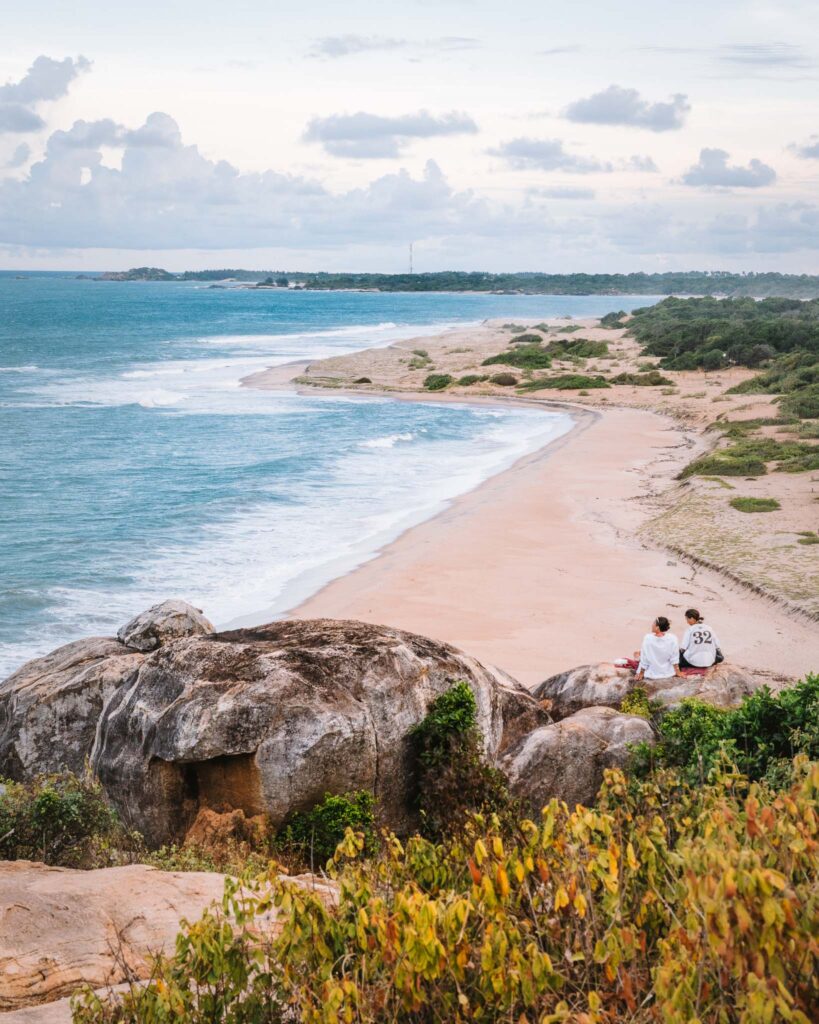
The landscape view was still good. I liked using the rocks in the foreground, with the beach leading away into the distance. There were also a couple of tourists sitting on the rocks, and rather than ruining the scene, they helped give a sense of scale and place.
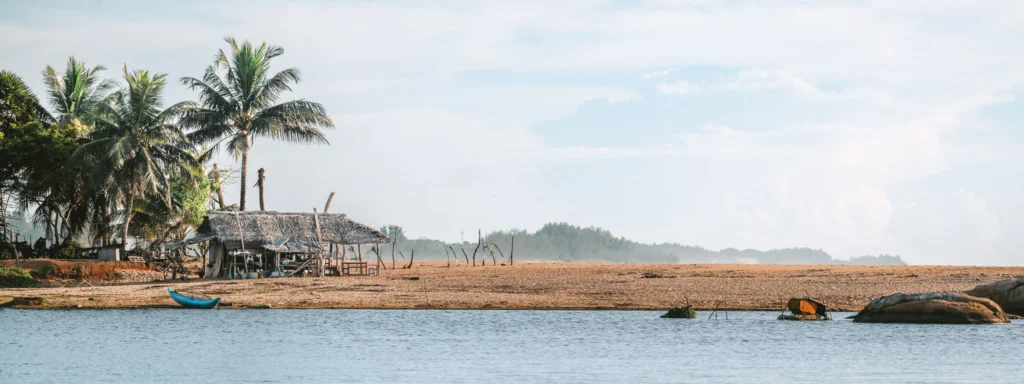
Below the rock, I noticed a fisherman throwing his net into the water. Those were not necessarily the strongest photos of the evening, but they were interesting. Sometimes those smaller moments help tell the story of a place better than the obvious landscape shot.
Elephant Rock can also be a surf spot, but while I was there it was just a small shore break and not really doing much. After sunset, before the light disappeared completely, I headed back down to the tuk tuk.
Wildlife and Countryside Photography Around Arugam Bay
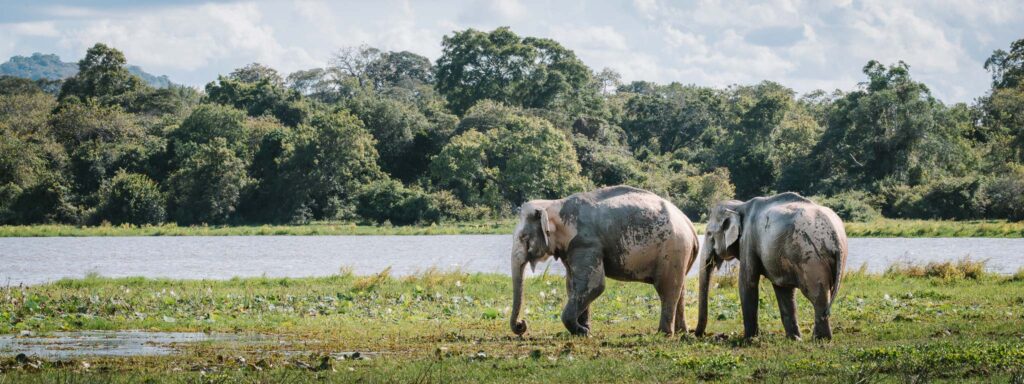
A few days later I messaged the same driver again. I wanted to explore more of the countryside around Arugam Bay. The area is full of rice paddies, small lakes, trees, birds, crocodiles and elephants, so it seemed worth spending an afternoon just driving around with the camera.
We headed out towards a tank about 45 minutes away. I had an image in my head of elephants standing or playing in the water, with the landscape around them. My favourite wildlife photos are often not tight close-ups but wider environmental images that show where the animal lives.
On the way, my driver stopped at a few places where he knew there might be crocodiles.
We looked down into a small river, being careful not to get too close to the banks. I was very aware that crocodiles are much better at stalking me than I am at spotting them. Soon enough we saw ripples in the water and the tops of heads just breaking the surface.
My driver wanted to find some out of the water, so we walked along a bank into the bush a little. I had not thought this through properly and was wearing sandals and shorts, which was not ideal. I was suddenly very aware of snakes, ticks, and everything else that might be hiding in the grass. Next time I would definitely wear long pants and shoes.
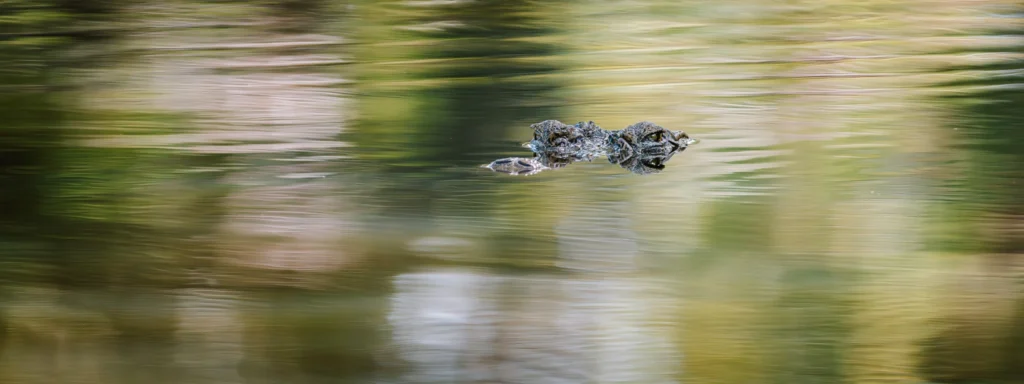
The crocodiles stayed mostly submerged, so I photographed the tops of their heads in the green reflections of the trees. I am sure the photos would have been stronger from lower down near water level, but there was no way I was getting that close to the water just for a better angle.
These were mugger crocodiles, also known as marsh crocodiles. I saw them several times during the trip. They can grow large enough that you do not really need to be testing their patience.
After that we carried on. We stopped briefly at a small Buddhist temple with monkeys in front of it, then found a tank with elephants nearby. The sun was still high and the light was harsh, but we stopped and watched them for a while. I tried to find a good position, but with the road where it was and the elephants where they were, there was only so much I could do.
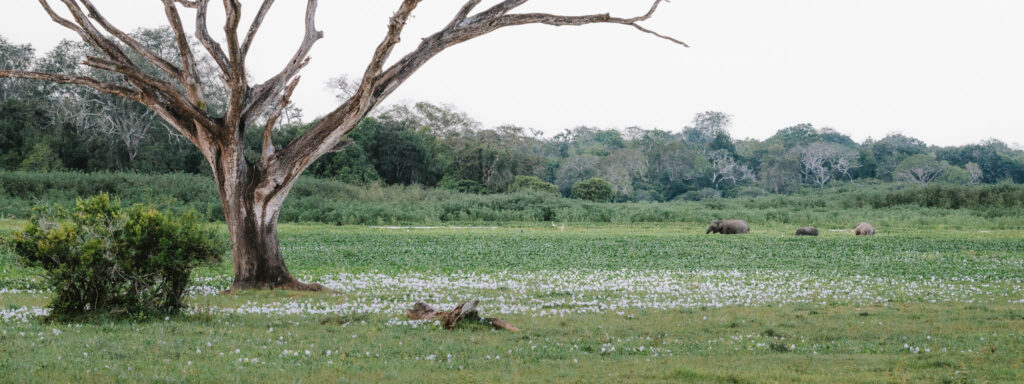
Further on, we reached the tank I had been hoping to photograph. I think it could be a great place for landscape photography in the right season. There were some good-looking trees that would probably make nice reflections if the water level were higher. The dream shot would be elephants in the tank beside those trees, with reflections in the water.
That was not happening this time.
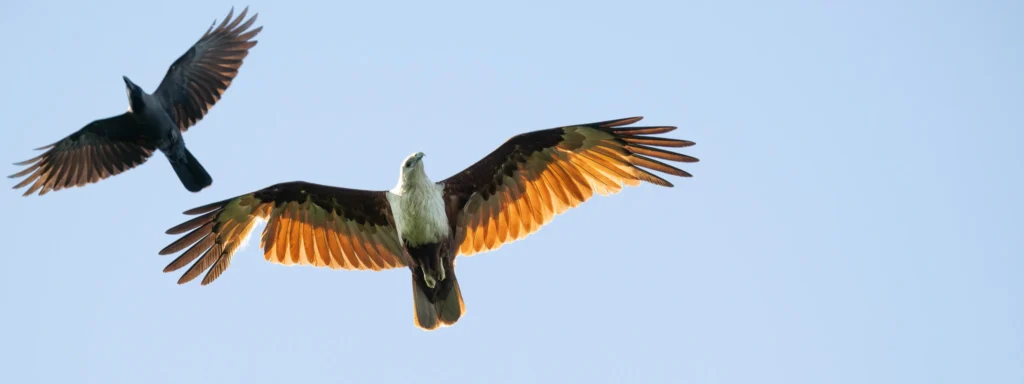
The water was lower, and the elephants were too far away. There were water buffalo in the tank, birds perched around the place, and a Brahminy Kite nearby. I got the tripod out and tried to shoot a mix of photos and video of the elephants, but they were too distant to really make the image I wanted.
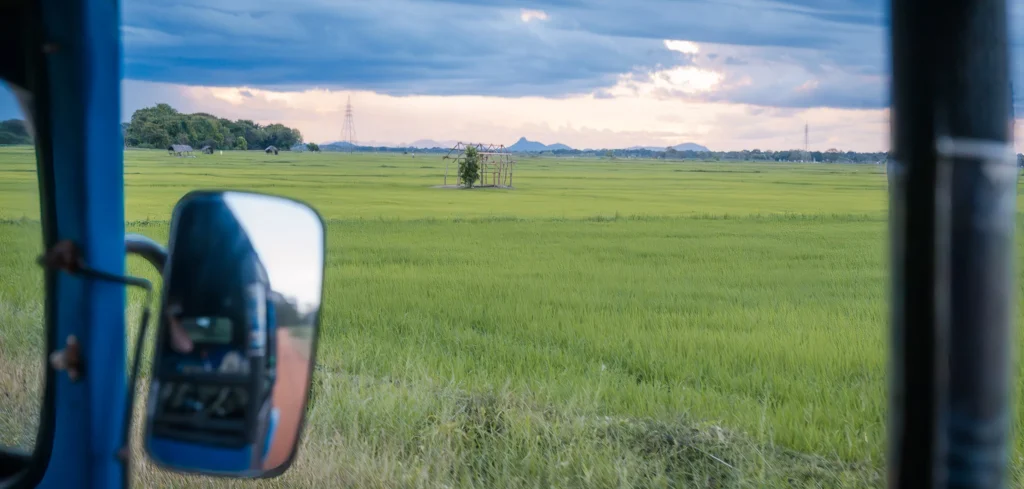
Eventually we started heading back before sunset. My original plan had been to stay at the tank for sunset, but there was thick cloud building, so it seemed better to move.
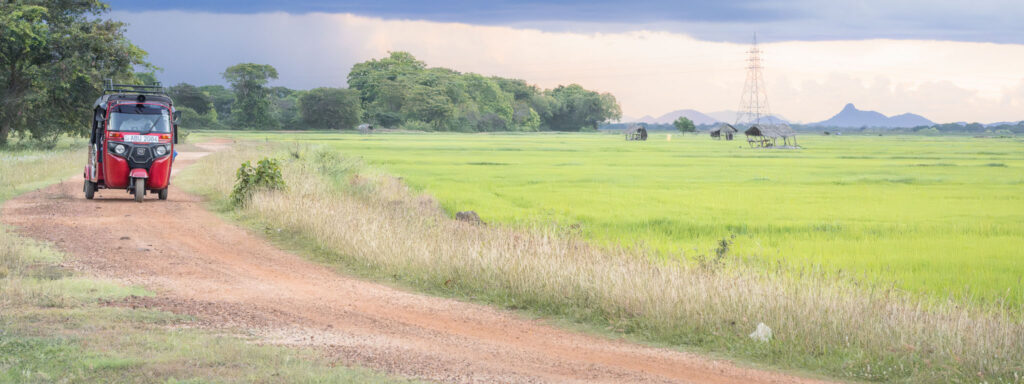
Closer to town the sky became more interesting. I looked back towards the darker weather over the countryside and photographed the farmland in the evening light. A tuk tuk came along the road at the right time and became a foreground element. Maybe a little cliché for Sri Lanka, but sometimes clichés exist for a reason. Tuk tuks are everywhere, and the scene felt true to the place.
Pottuvil Lagoon Boat Safari for Photographers
Next, I wanted to check out Pottuvil Lagoon. I had heard there were plenty of birds, elephants and crocodiles there, and that you could do sunrise boat safaris in small boats.
That sounded good to me.
The problem I found in Sri Lanka is that many transport, safari and tour companies have poor websites, or no websites at all. A lot seems to work through word of mouth, WhatsApp, guesthouse recommendations, and asking around town. That can be fine, but it also means you often do not really know what you are getting.
For photography, I wanted someone who understood more than just ticking off animals. I wanted a guide or operator who would take time, think about light, and not rush from one sighting to the next.
After looking through reviews and forums, I found a company that a few people said was good for photographers. The price seemed reasonable, so I booked a sunrise boat safari.
The next morning they picked me up early by tuk tuk and took me to Pottuvil Lagoon. We started around 6am, but the sun was already coming up. For photography, starting 30 minutes earlier would have been better, but the light was still nice.
The boat was a small catamaran-style boat, moved quietly through the lagoon with a pole. There was a boatman steering and a young guide with me. It turned out it was only his second tour as a guide, but he was enthusiastic, friendly, and clearly interested in the wildlife.
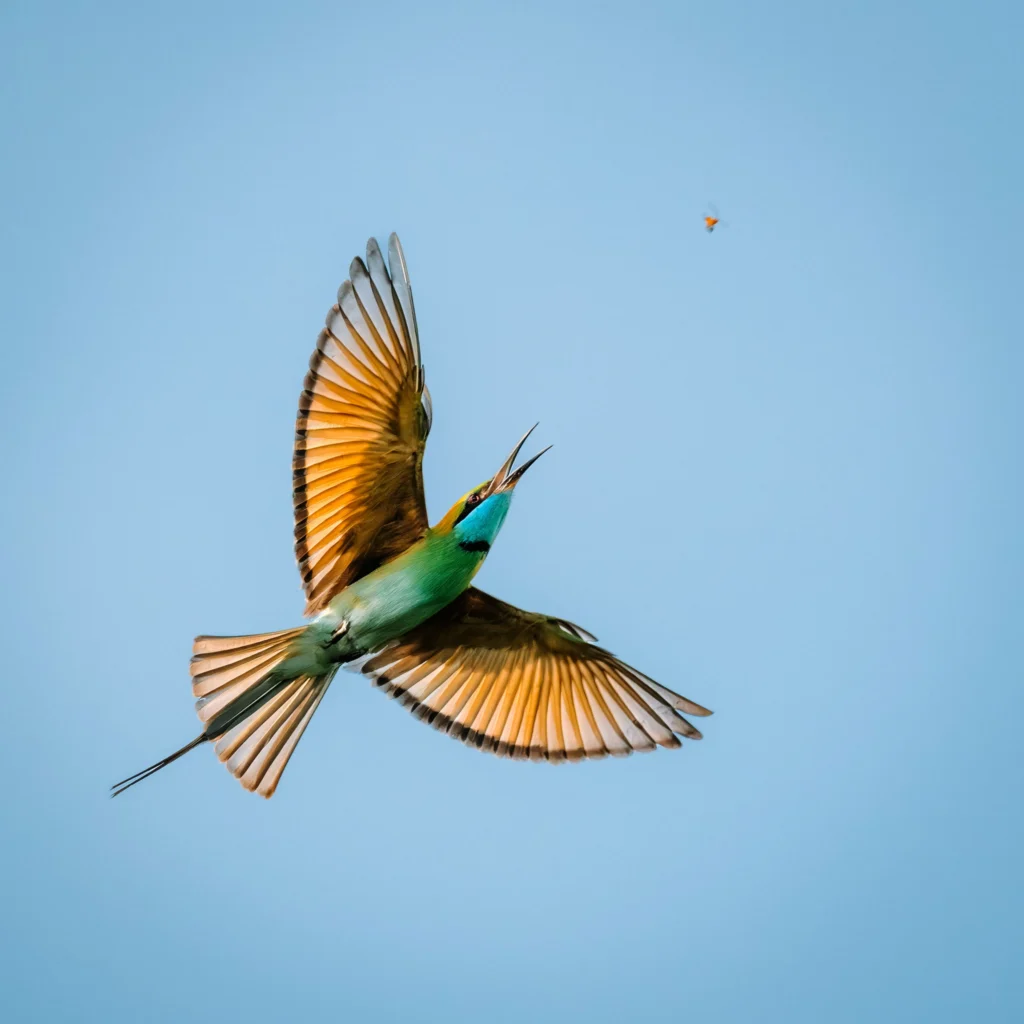
He did mix up a few English bird names, calling a bee-eater a kingfisher at one point, but overall he was good. More importantly, he was keen and engaged.
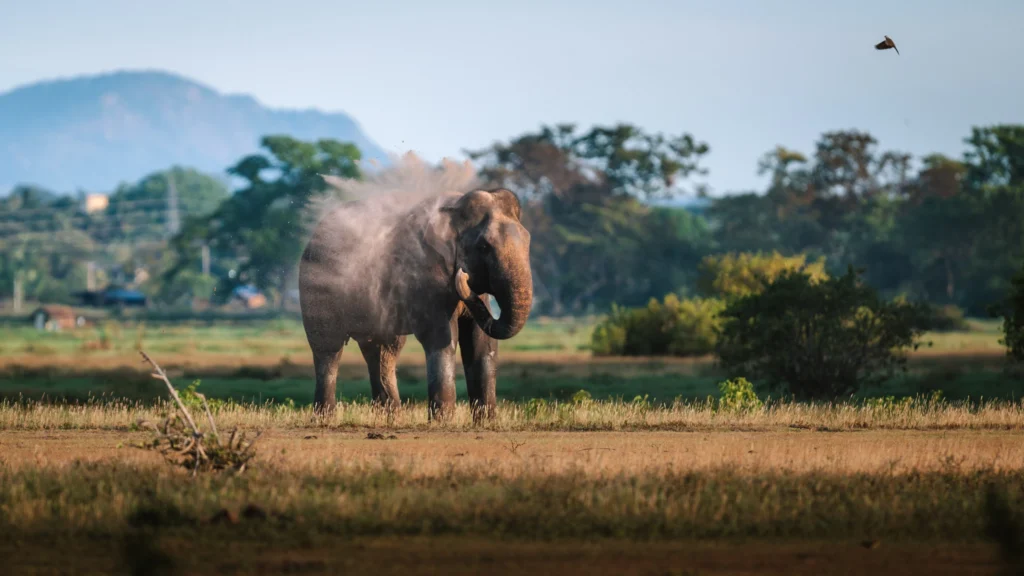
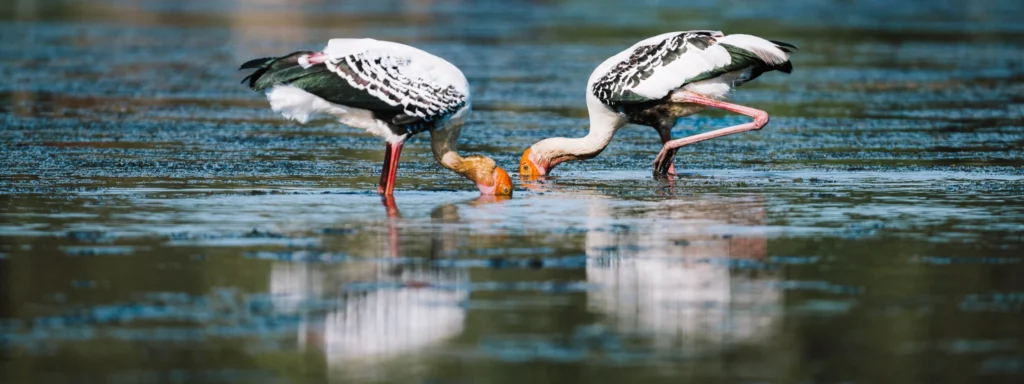
We saw herons, egrets, pelicans, bee-eaters, kingfishers and other birds around the lagoon. We also saw elephants along the shore. They were not super close, but the light was nice and they made good environmental wildlife images. Some of those elephant photos ended up being among my favourites from the trip.
We did not see any crocodiles from the small boat, which was probably not a bad thing. Afterwards, on the way back, the guide took a short detour to some nearby rivers where we did find more crocodiles. Again they stayed mostly submerged, with only their eyes and heads showing above the water.
Overall, the Pottuvil Lagoon boat safari was worth doing. The morning light over the lagoon was beautiful, and it was a peaceful way to photograph wildlife near Arugam Bay. I just wish we had started a little earlier. The company was good, although they were also quite pushy about trying to upsell more tours afterwards, which I did not love.
Camera Gear for Arugam Bay Photography
For the Arugam Bay part of the trip I mainly used my Nikon Z8 with the Nikon Z 180-600mm and the Nikon Z 24-120mm f/4.
That combination worked really well.
The 180-600mm was useful for birds, crocodiles and elephants around Arugam Bay. It is not a small lens, though. Walking around town or jumping in and out of tuk tuks with it is not exactly relaxing.
There were times I missed my smaller F-mount 300mm f/4 PF. That lens would have been perfect for wandering around looking for birds because it is so much lighter. But I could not bring everything, and the flexibility of the 180-600mm was worth the weight.
The 24-120mm was also extremely useful. I used it for landscapes, wider wildlife photos, general travel shots, and scenes where I wanted to show more of the environment. It is one of those lenses that just makes sense for travel photography because it covers so much without needing to constantly change lenses.
If I went again, I would bring the same main setup. I would maybe just be more prepared with proper clothing for walking through grass and bush. Sandals and shorts around crocodile rivers and snake country was not my smartest move.
The Light in Sri Lanka
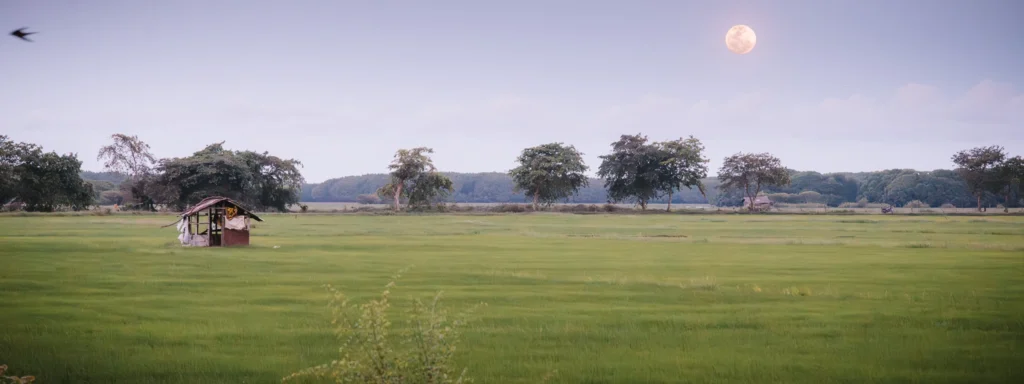
One thing I noticed in Arugam Bay and Sri Lanka generally is that the golden hour light felt much shorter than what I am used to in Japan or New Zealand.
Back home, especially further from the equator, sunrise and sunset can feel like they stretch out longer. In Sri Lanka the sun seemed to drop fast. The nice light came and went quickly.
That made timing more important.
For wildlife photography, that can be frustrating because the animals might not be where you want them when the light is good. On safari, some of the best light of the day happened right when we had to leave the park.
At the same time, I tried not to write off the harsher light completely. Photographers often talk like midday light is useless, but I do not think that is always true. It is harder to work with, but sometimes strong light suits the heat, dust and atmosphere of a place. You just have to adjust expectations and look for different kinds of images.
Final Thoughts on Arugam Bay for Photography
Arugam Bay turned out to be a great base for a mix of surfing and wildlife photography. The surf season was only just starting while I was there, so I did not get the full Arugam Bay surf experience, but there was enough to enjoy being in the water.
For photography, I found the area more interesting than I expected. There is wildlife close to town, good access to lagoons and countryside, and Kumana National Park is close enough for a day trip.
For the best landscape photography around the tanks and wetlands, I suspect a wetter season would be more interesting, with higher water levels and better reflections. I would love to return when the tanks are fuller, the light is right, and I have more time to explore slowly.
Arugam Bay may be known mostly as a surf town, but for me it became a place of elephants, crocodiles, wetlands, birds, tuk tuks, harsh sun, short golden hours, and a lot of unexpected photography.
The biggest wildlife highlight of my time in the area was my full-day safari in Kumana National Park, which I have written about separately here:
Kumana National Park photography safari post.
If you enjoyed this post, feel free to explore more of my photography stories and location guides on the blog. I’ll be adding more from Sri Lanka, Japan, New Zealand and other places as I slowly work through the images and stories from the road.
You can also sign up for my newsletter below if you want new posts, photography notes and occasional behind-the-scenes updates sent straight to your inbox.