
Hokkaido Winter Photography – Forests, Wildlife and Quiet Places
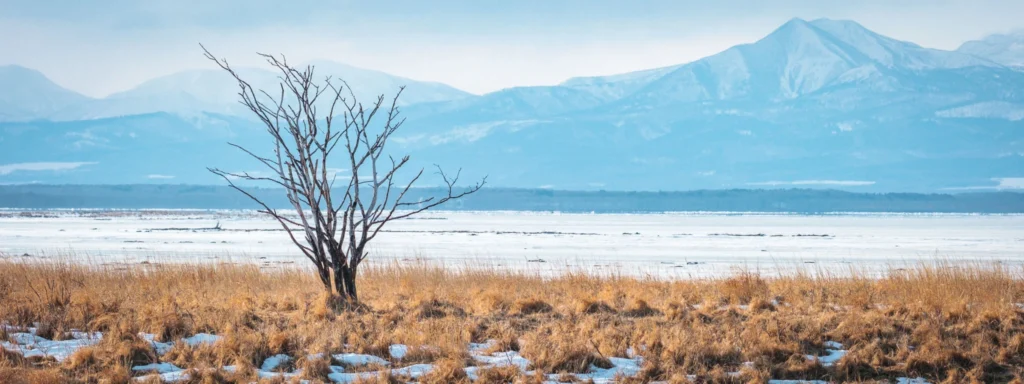
Winter in Hokkaido is not gentle. Weeks can pass without a clear sky. Snow falls constantly, wind cuts through layers, and temperatures drop well below freezing. It would be easy to stay inside.
But this is exactly why Hokkaido winter photography is so compelling.
I’ve spent around 15 winters here, originally chasing deep powder for skiing, but over time I became just as drawn to what winter does to the landscape. Forests simplify. Wildlife becomes easier to see. Colour fades and shape takes over. When you’re willing to go out into it, winter here reveals a quieter side of Hokkaido that feels completely different from the green months.
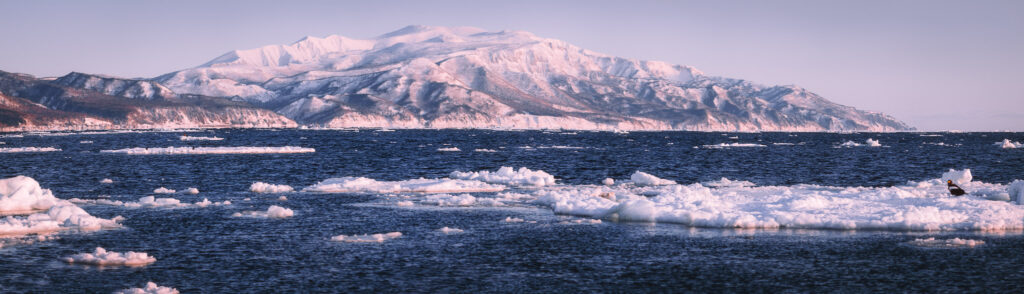
Hokkaido is Japan’s most northerly island and exceptionally seasonal, something I talked about in my blog on Hokkaido’s seasons. It was not formally part of Japan until the 1800s. Before that, the Ainu — the Indigenous people of Hokkaido — lived here with a belief system deeply connected to nature. Their worldview was animistic; animals, rivers, fire and natural forces were believed to be inhabited by spiritual beings known as Kamuy. The brown bear in particular was sacred, seen not just as an animal but as a powerful spiritual presence.
Since Japanese settlement, large-scale development and environmental destruction followed, but compared to much of mainland Japan, Hokkaido still retains a stronger sense of wildness. There are still large forests, wide wetlands and long stretches of undeveloped coastline.
The Forests in Winter
Winter here can be brutal. In Niseko, through December, January and February, we can go weeks at a time with very few clear days. It is often snowing, windy and low visibility. Temperatures can drop to -20°C or lower with wind chill. Central Hokkaido can be even colder, although they tend to get more clear blue-sky days.
It makes it tempting to stay inside. In summer I hate being indoors, but in the darkness of winter it is very easy to hibernate. Still, I push myself to go out, dress properly, and head into the forest. I am almost always rewarded.
My favourite place in Hokkaido in winter is the forest. It is peaceful and incredibly silent, especially when snow is falling. The usual chaos of leaves and undergrowth disappears. The sasa grass and thick summer vegetation are buried under deep snow, making it much easier to move around on snowshoes or skis without bush bashing.
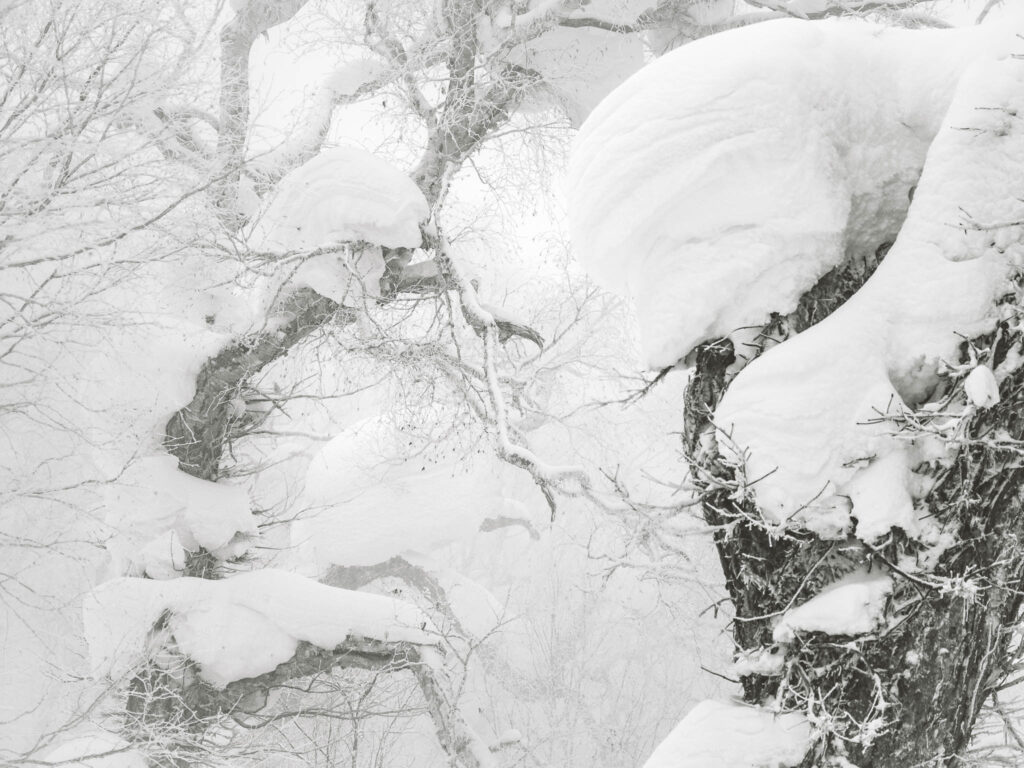
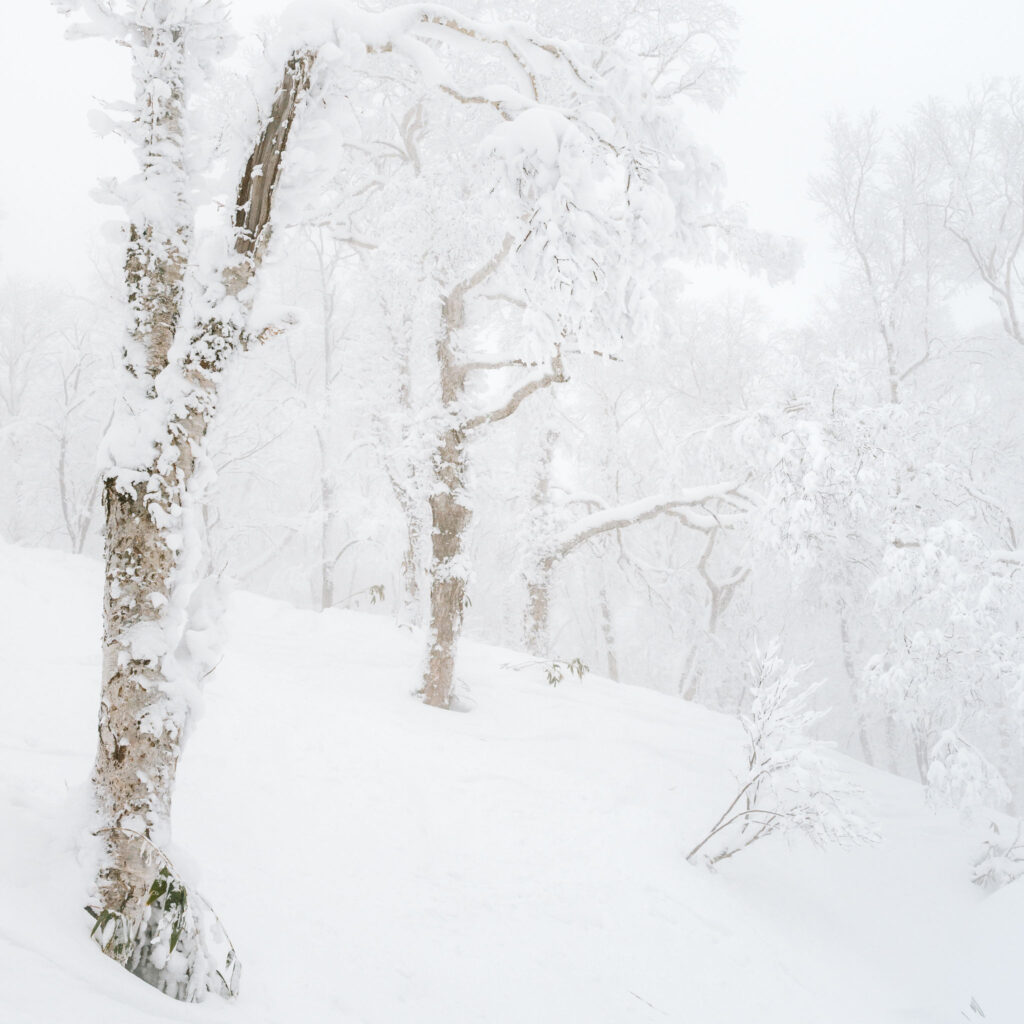
The forests are full of birch, Mizunara oak, Ezo spruce and Sakhalin fir. The spruce and fir hold heavy snow on their horizontal branches, forming huge white pillows that weigh the trees down. Birch trunks stand out against the white, their pale bark contrasting softly with the muted winter tones.
But it is the old oak trees I am drawn to most. In winter, when they have lost their leaves, their shapes are exposed. I love the skeletons of the big old oaks — the twisting branches, the structure, the way the snow settles along the limbs and exaggerates their form. Without leaves, the trees become more architectural. The lack of colour simplifies everything and exposes shape. For someone who enjoys minimalist winter photography, this is when the forest makes the most sense.
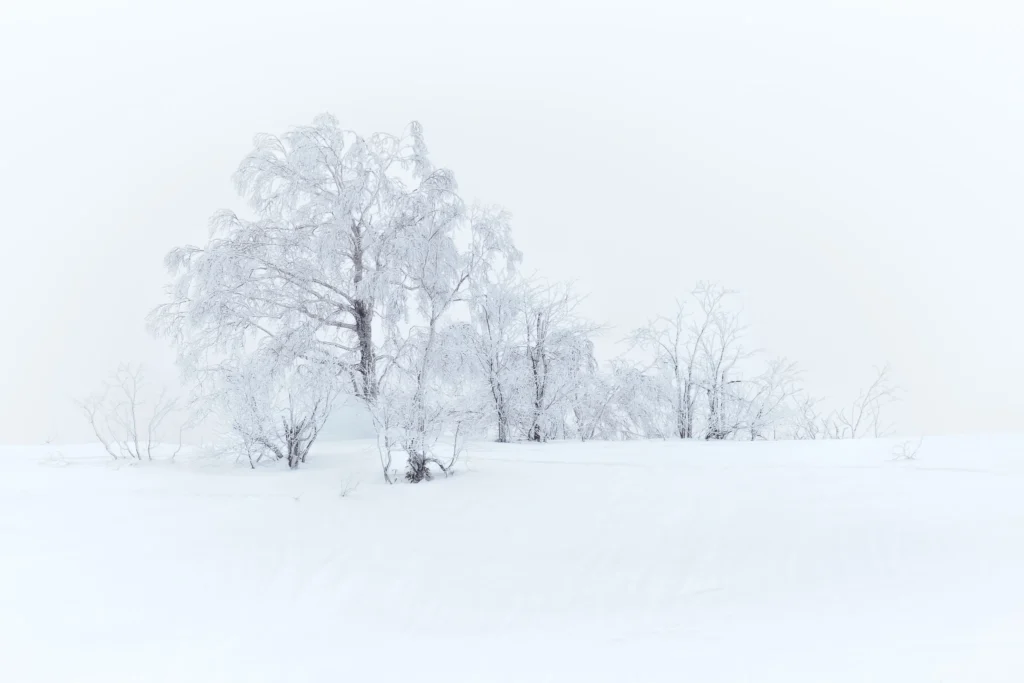
The palette is subtle — white snow, pale birch bark, dark trunks and soft shadows. The muted tones suit this style of photography. Fog and low visibility, which might feel unpleasant at first, can actually help simplify scenes further, isolating individual trees in ways that clear blue skies do not.
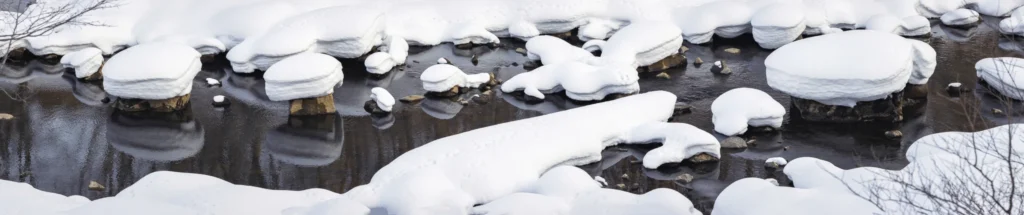
Rivers, Snow Mushrooms and Ice
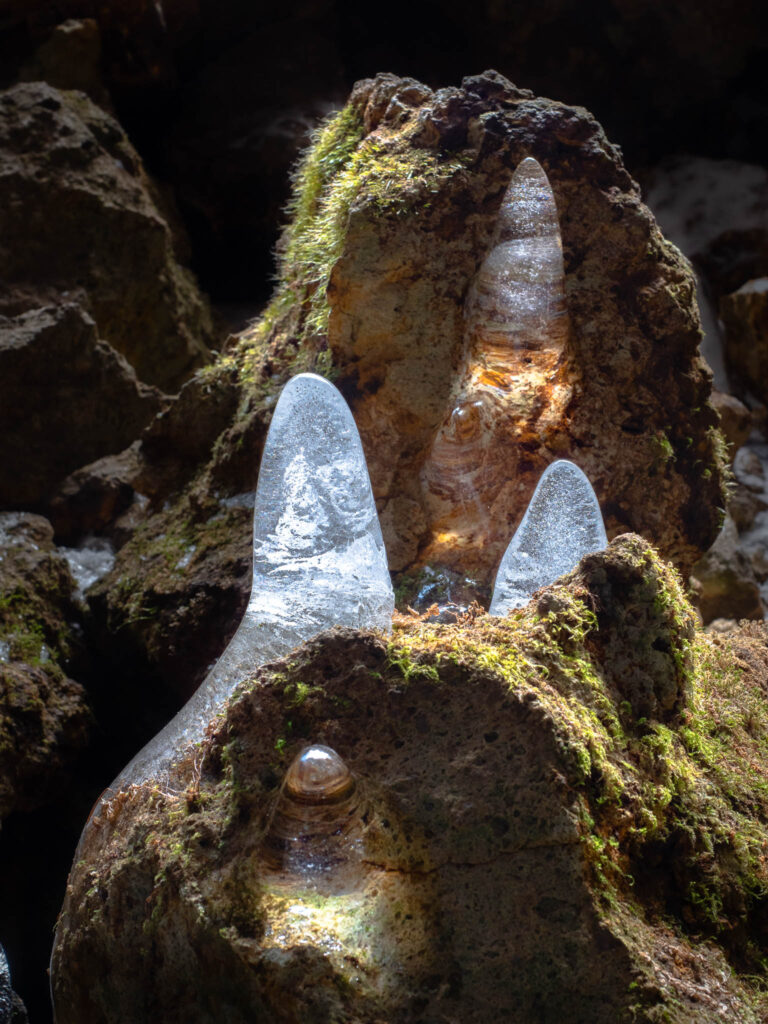
Beyond the forests, rivers and creeks are worth exploring in winter. Snow builds up on exposed rocks, forming rounded “snow mushrooms” while dark water flows around and through them. On colder days, ice patterns form along the edges and around fallen branches.
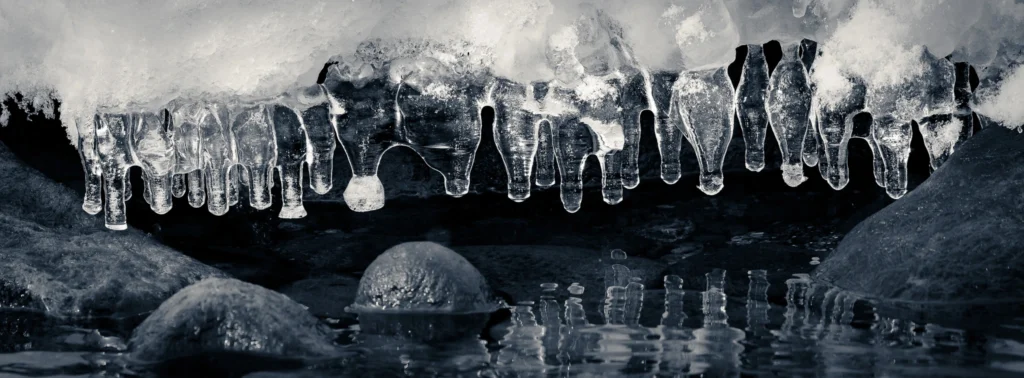
These small details often make better photographs than wide scenic views. Winter in Hokkaido is not always about big vistas — sometimes it is about subtle forms and quiet corners.
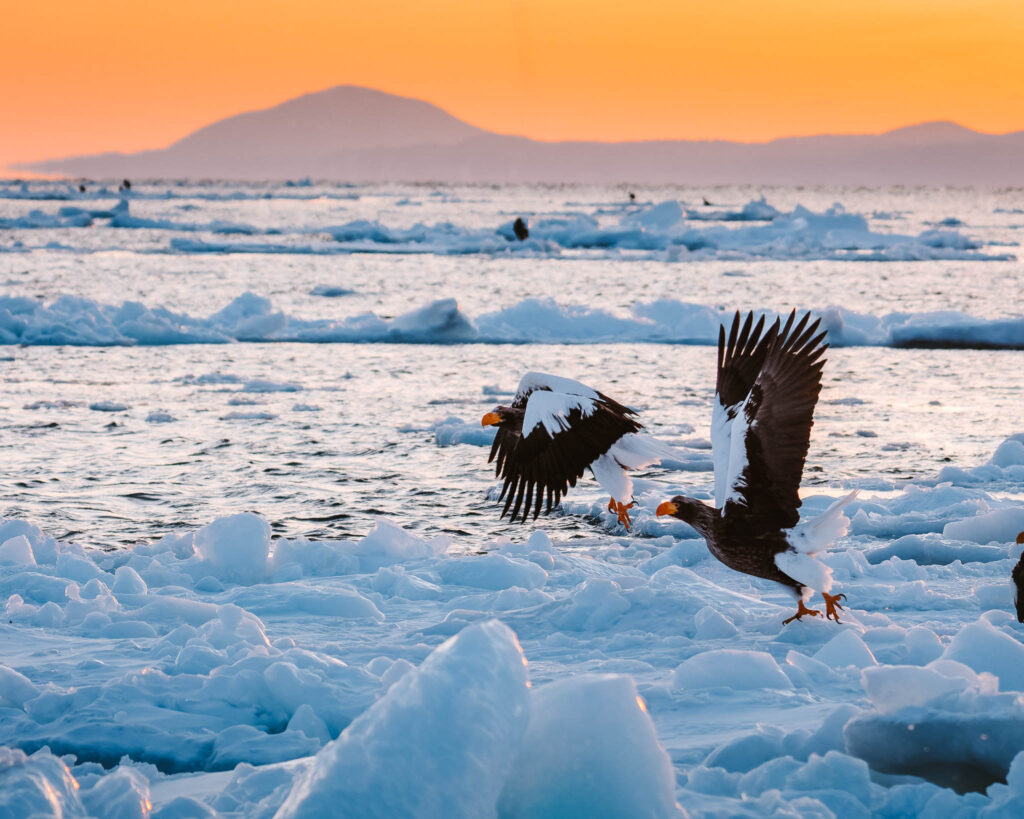
Wildlife Photography in Hokkaido Winter – Eagles Over the Drift Ice
Winter is also one of the best seasons for wildlife photography in Hokkaido. With the leaves gone and vegetation reduced, it becomes easier to see into forests and along open coastlines.
But one of the most powerful winter wildlife experiences here happens along the eastern coast.
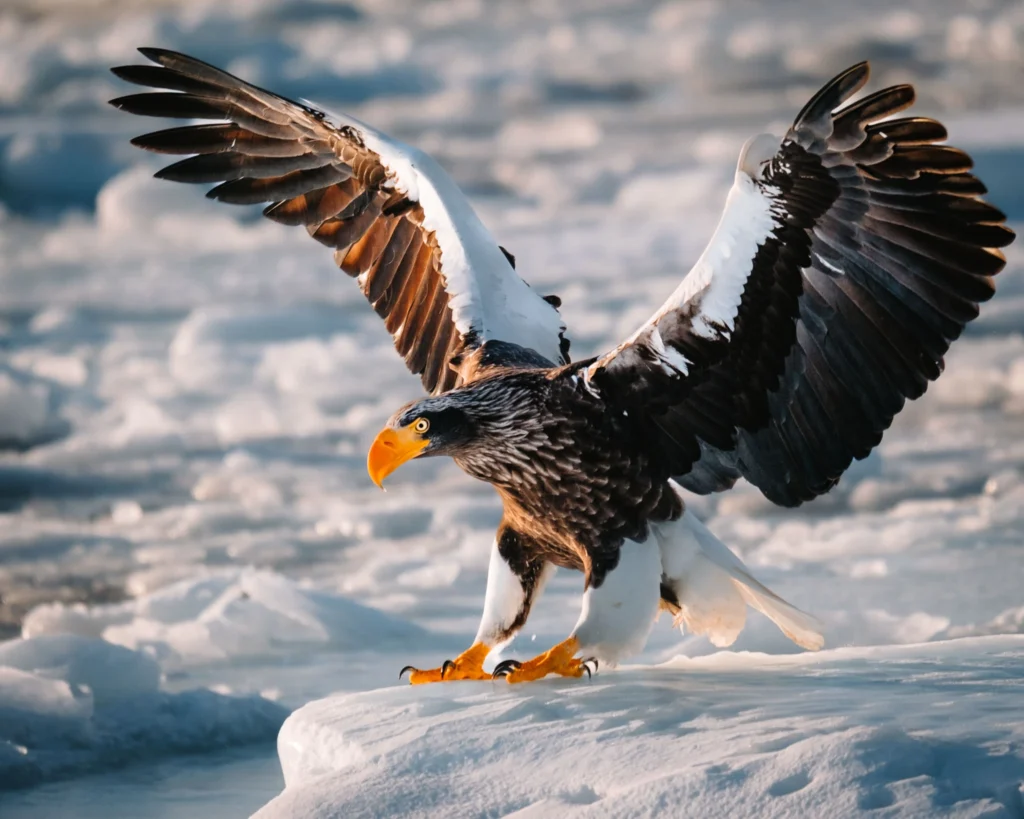
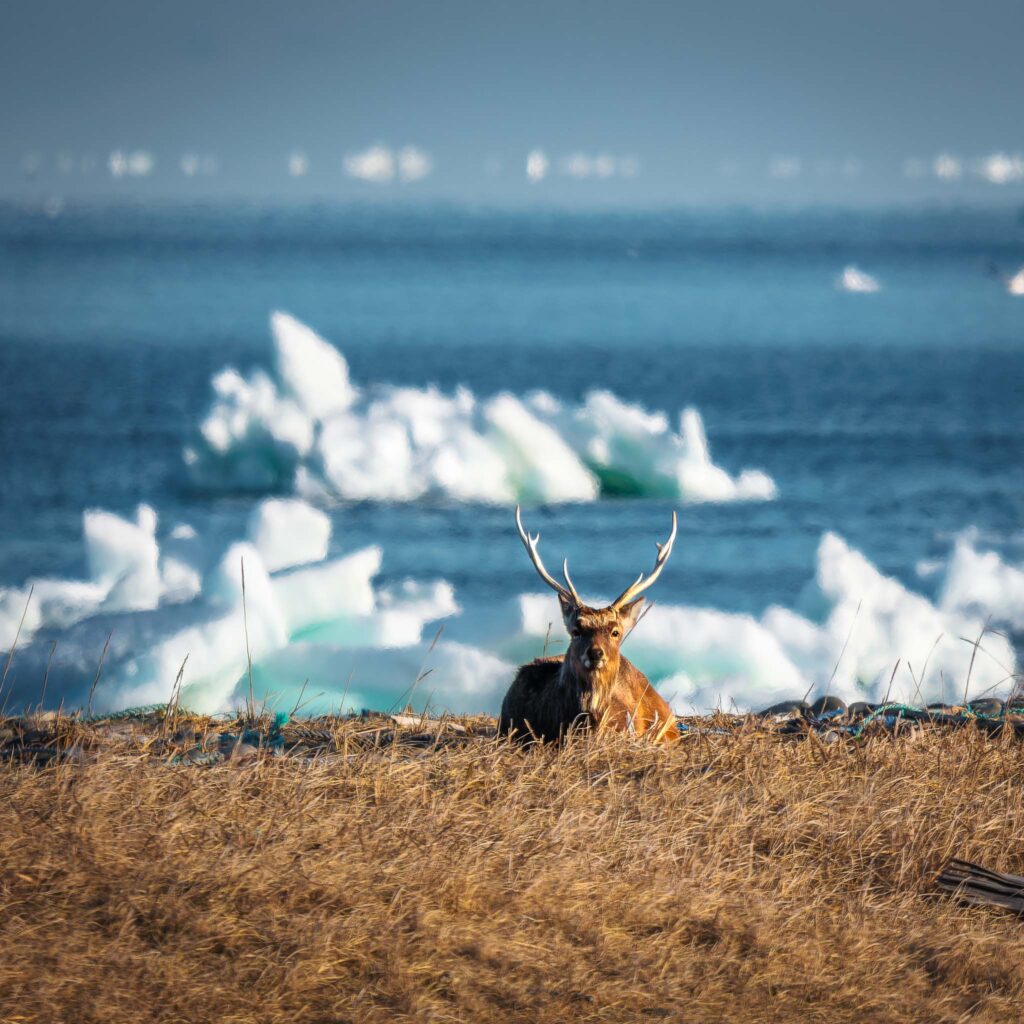
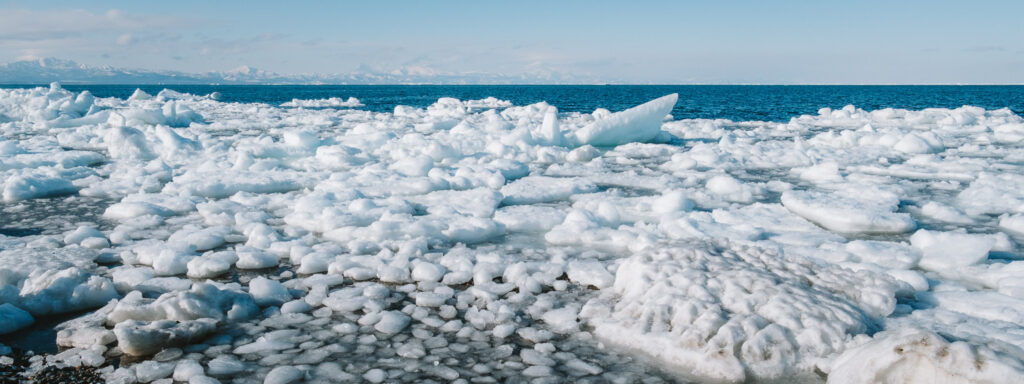
Through January and February, drift ice collects along the coast of eastern Hokkaido, particularly around the Shiretoko Peninsula. As the sea ice forms and pushes in, Steller’s sea eagles and white-tailed eagles gather to hunt fish along the ice edge.
The first time I saw a Steller’s sea eagle I was genuinely in awe. They are the largest eagles in the world, with wingspans reaching over two meters. Even knowing that, seeing one in person is something else. They are huge, heavy birds, with massive yellow beaks and an authority in the air that is hard to describe.
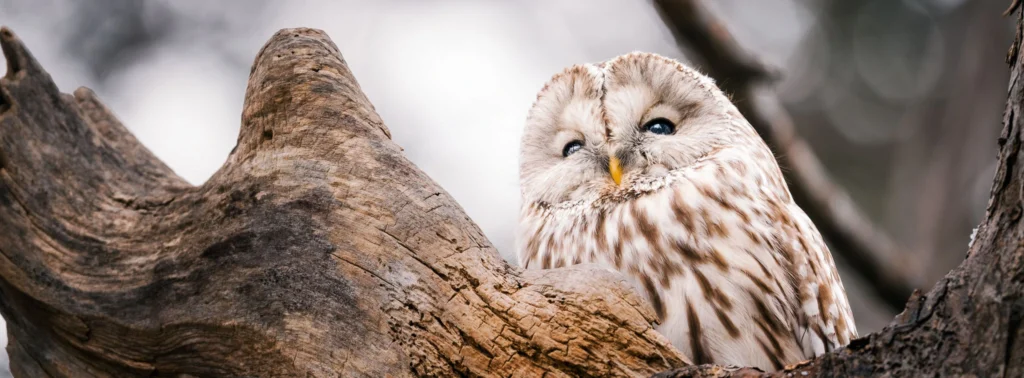
Photographing them over the drift ice is incredible — the contrast of black and white plumage against the white ice and dark sea works beautifully in winter conditions. But one thing I still feel I haven’t fully managed in my photos is showing just how big they really are. Without a clear reference point, it’s difficult to communicate their scale. In reality, when one flies low overhead, you feel it.
If you want to read more about photographing eagles in Hokkaido and where to see them, I wrote a separate blog about it here.
Central Hokkaido and Minimalist Winter Landscapes
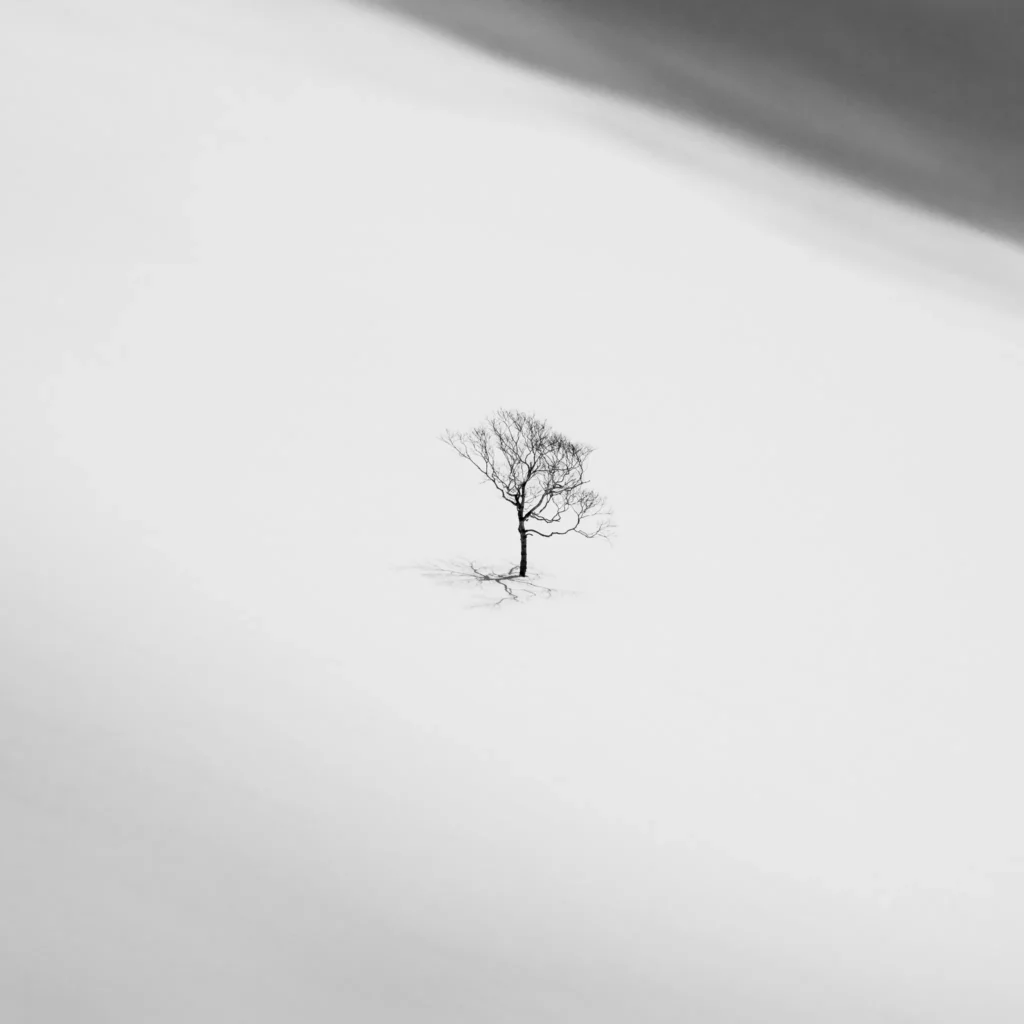
Central Hokkaido, particularly around Biei and Kamifurano, has become famous for minimalist winter photography. The rolling farmland, isolated trees and mountain backdrops — often with the Tokachi or Daisetsuzan ranges behind — create clean compositions that are easy to understand visually.
Coming from New Zealand, where rolling hill country is common, the landforms themselves don’t feel unusual to me. But what makes central Hokkaido special is the consistency of deep winter snow. The snow simplifies everything — covering fields, fences and tracks — turning ordinary farmland into strong graphic compositions.
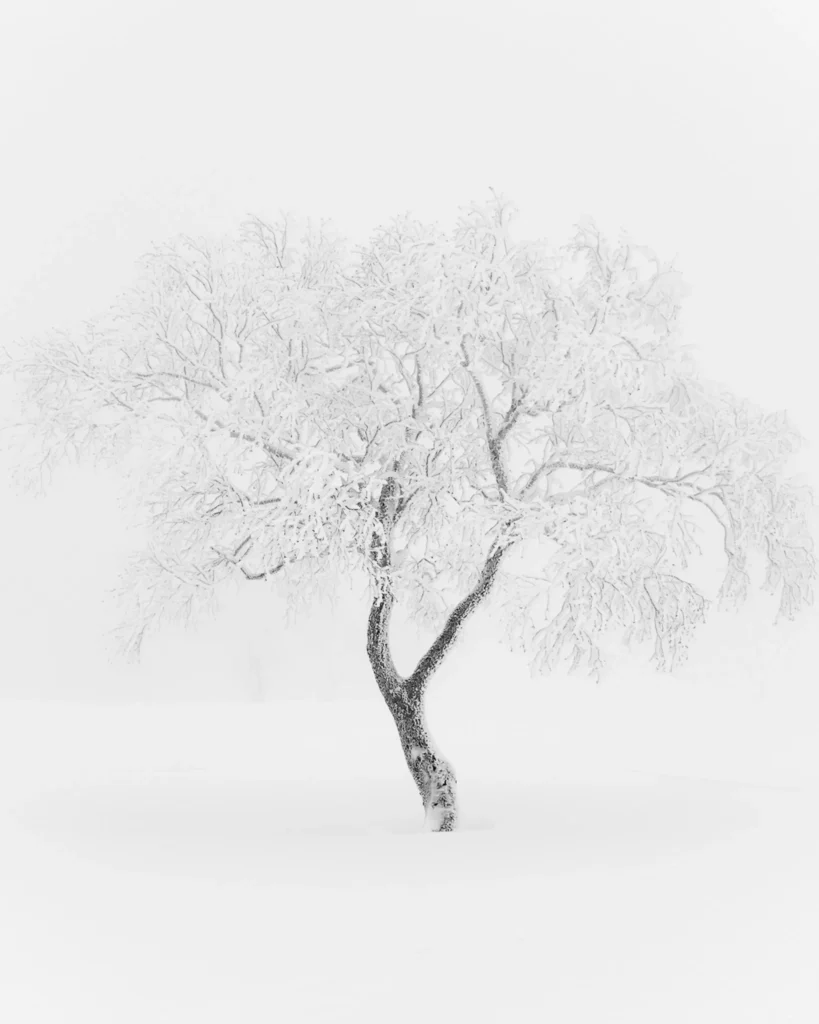
I do enjoy photographing lonely trees or fences in the snow. They can be powerful when reduced to shape and contrast. However, I believe this kind of minimalist winter photography can be found throughout Hokkaido, not just in the overtouristed areas. Snow, open space and simple forms exist far beyond the most famous trees.
Some of the most well-known trees have become so heavily photographed that farmers have threatened to cut them down due to the nuisance caused by visitors entering private land. It’s a reminder that while these iconic locations look simple and peaceful in photos, they sit within working farmland. There are countless quieter locations if you are willing to explore respectfully.
Why Winter Keeps Drawing Me Back
Winter has been a large part of my life. I have chased snow around the world looking for deep, untouched powder for skiing. I found that in Hokkaido. But I also found something else.
On a clear, cold blue-sky day after fresh snow, there is a slight warmth from the low winter sun. Diamond dust floats in the air. The snow squeaks underfoot. Snow piles up in soft pillows on branches and along riverbanks. After days of storm and cloud, those rare crisp days in the backcountry with skis or snowshoes and a camera feel different.
They make me feel alive and connected to the landscape around me.
That is what Hokkaido winter photography means to me.
Practical Tips for Photographing Hokkaido in Winter
If you are coming to photograph Hokkaido in winter:
- Bring proper cold-weather clothing.
- Carry spare batteries — cold temperatures drain them quickly.
- Keep batteries in a pocket close to your body when not in use.
- Use weather-sealed camera gear if possible. Heavy snowfall is common here, and it’s not unusual to be shooting in steady snow for hours. I’ve often had my camera completely covered. When moving between freezing outdoor temperatures and warm indoor spaces, condensation can also become an issue.
I rely heavily on weather-sealed bodies and lenses in winter. If you’re curious about the camera gear I personally use for Hokkaido winter photography, you can see my full gear list here.
If you want more detailed advice on handling camera equipment in cold conditions, I wrote a separate blog post about photographing in freezing temperatures.
Exploring Beyond the Famous Spots
Over 15 winters here, I have wandered far beyond the well-known Instagram locations.
I created the Hokkaido Nature Photography Map as a way to share places I’ve personally explored — quiet forests, lesser-known coastlines, wildlife areas and random spots that don’t always appear in guidebooks. It isn’t just a list of famous postcard views. It’s a starting point for exploring the island more deeply.
If you are interested in Hokkaido winter photography and want to go beyond the obvious locations, you can explore the map here.
Hokkaido Winter Photography Summary
Hokkaido in winter is not always easy. It is cold, often grey, and sometimes uncomfortable. But if you’re willing to go out anyway, it rewards you with something unique — silence, structure, subtle light and moments that feel far removed from busy everyday life.
Whether you are drawn to quiet forest compositions, drift ice and eagles in the east, or minimalist farmland scenes in central Hokkaido, winter here offers a different kind of photography. Slower. Simpler. More stripped back.
If you’re planning a trip, make sure to explore the rest of the Hokkaido photography guides I’ve written, where I go into more detail about specific locations, wildlife and practical advice. And if you’d like updates on new blog posts, photography locations and future projects, you can sign up to the newsletter below.