
Lake Onuma Photography Guide: Islands, Reflections, and Mt. Komagatake
A Calm Lake, 100 Islands, and Endless Compositions in Southern Hokkaido
Some of the links in this post are affiliate links. If you buy something through them, I earn a small commission at no extra cost to you. It helps support this blog and the work I put into creating these guides. I only recommend gear I personally use and trust.
A Quiet, Underrated Lake in Southern Hokkaido
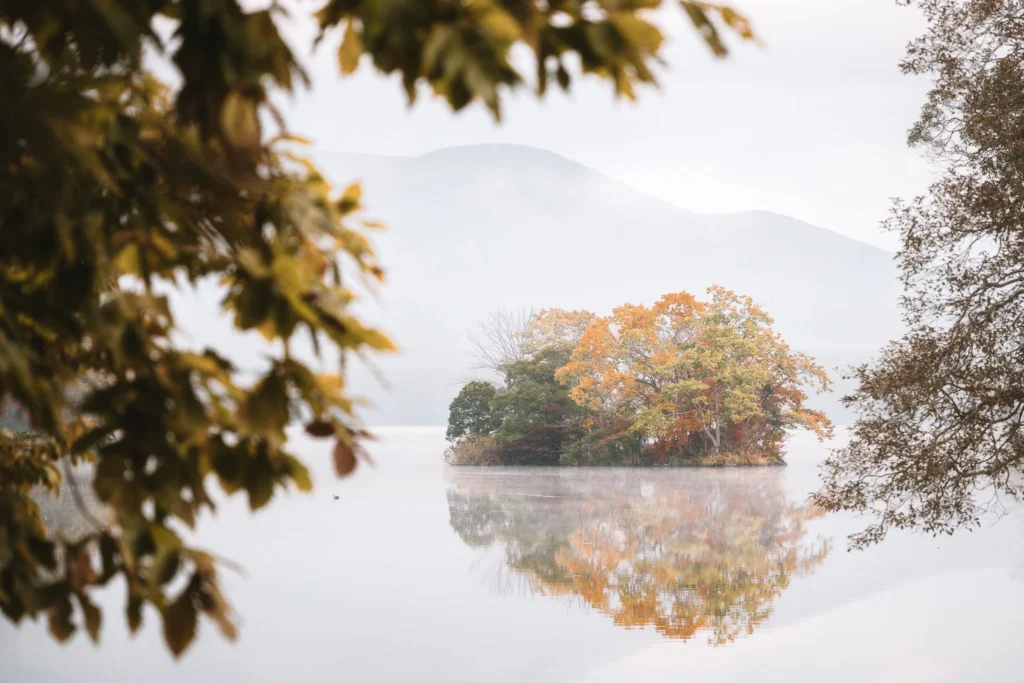
Lake Onuma sits just outside Hakodate in southern Hokkaido and is one of the most underrated landscape photography spots I’ve visited. The lake has over 100 small islands, calm shallow water, and the distinctive volcanic shape of Mt. Komagatake rising behind it. From minimalist scenes of lone islands in mist to reflections of the mountain glowing at sunset, it’s the kind of place where you instantly see endless photographic potential.
The lake is part of Onuma Quasi-National Park, which includes Lake Onuma, Lake Konuma, Junsainuma, and Mt. Komagatake.
Why Lake Onuma Has So Many Islands
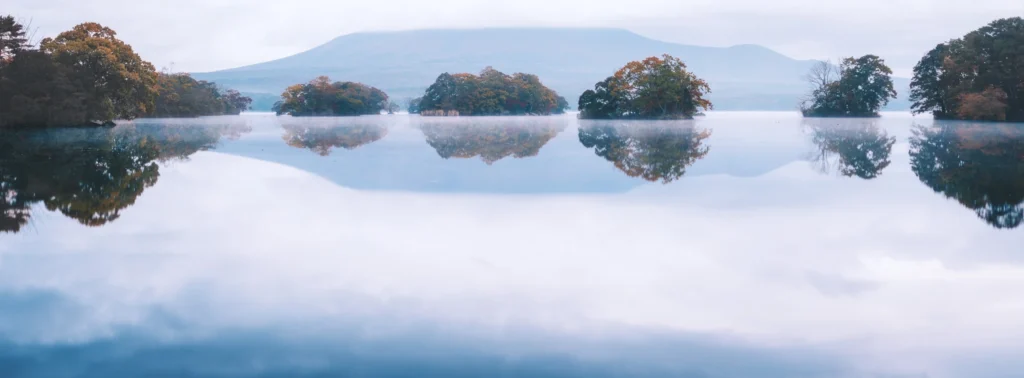
Lake Onuma formed after eruptions from Mt. Komagatake sent lava and debris into the surrounding lowlands, damming rivers and flooding the area. The higher bits of terrain stayed above water, which is why the lake is dotted with over 100 small islands. It gives the whole place a natural Japanese-garden feel.
How the Mountain Shapes Weather
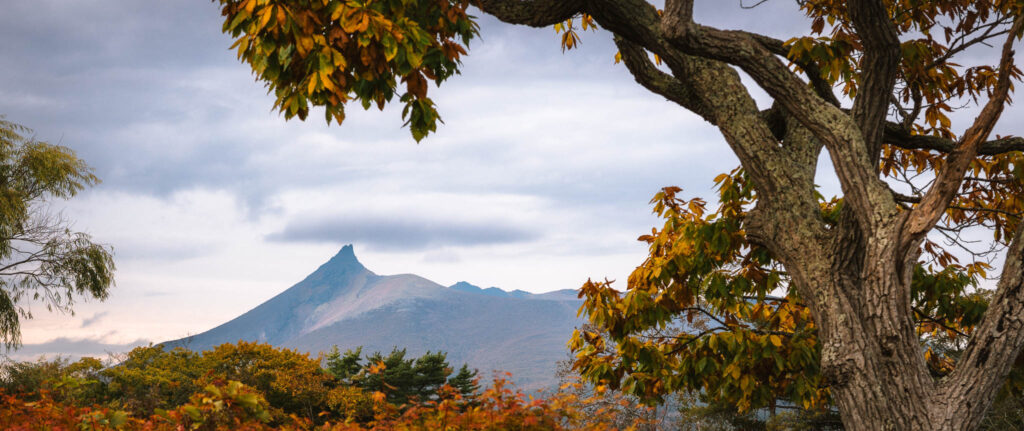
Mt. Komagatake helps create a small microclimate around the lake. Moist air drifts inland from Hakodate, hits the mountain’s slopes and often turns into mist, low cloud, and soft morning light. Mornings are usually the calmest — perfect for reflections — before the wind picks up later in the day.
My Visits to Lake Onuma
I’ve visited a few times now, mostly in late spring/summer and once in early autumn. Each visit felt completely different.
Early Summer – Exploring the Whole Lake (and Fighting Bugs)
During my first trips, everything was bright green. I actually spent a full day driving and walking around the entire lake, checking almost every viewpoint and small road for potential compositions. There are a lot of good ones.
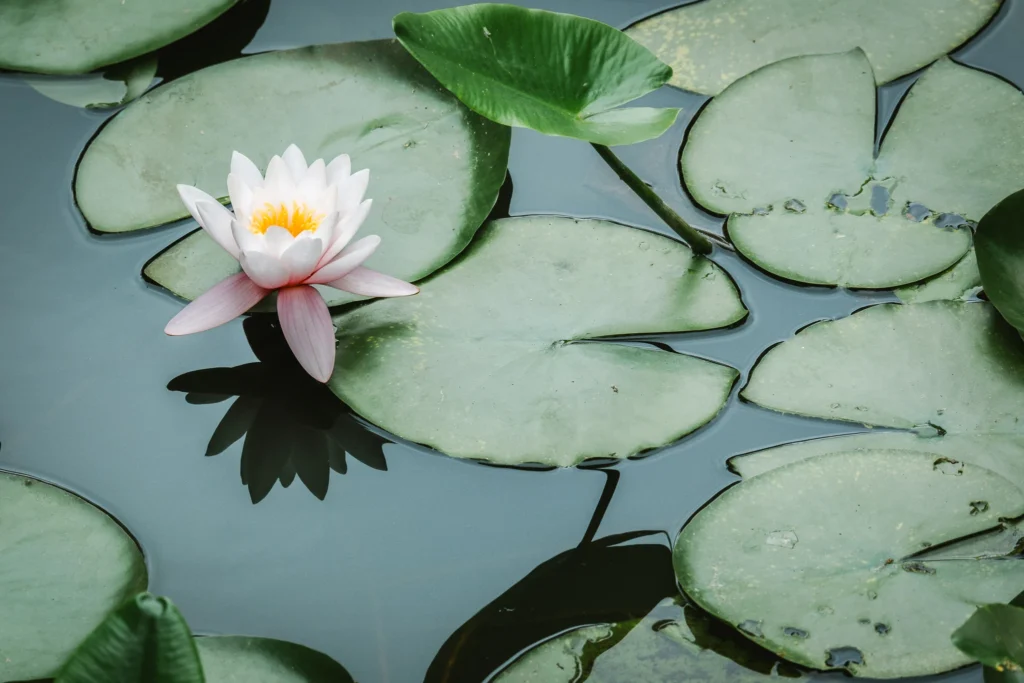
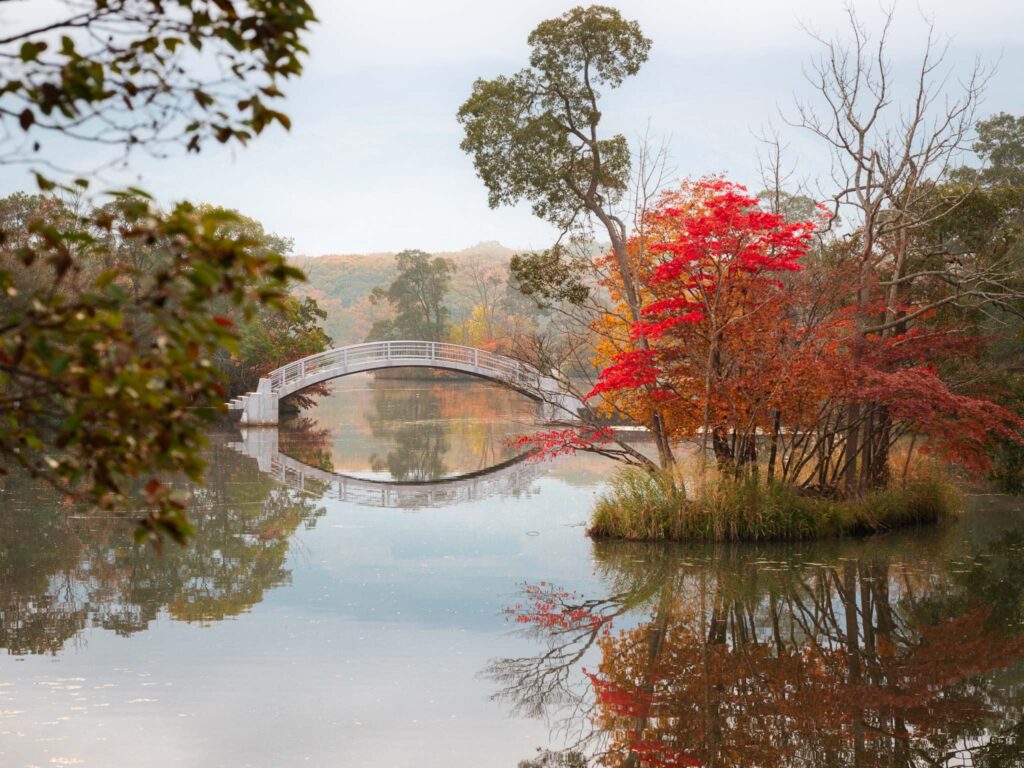
But I kept coming back to the island park in Onuma Town (Nanae) — the area with bridges linking all the little islands. I spent most of my time there. It’s easy to walk, has endless angles, and feels like the best place to build a foundation for compositions. I also saw a few grebes cruising around the calmer channels.
Then the bugs came. Early summer at Onuma is brutal for biting black flies. Even with repellent they were relentless. If I stopped moving to set up a shot, they swarmed me. At one point I put my mesh insect-proof pants over my head just to survive, and even then I gave up on one composition because the bugs were so insane.
Sunrise & Sunset
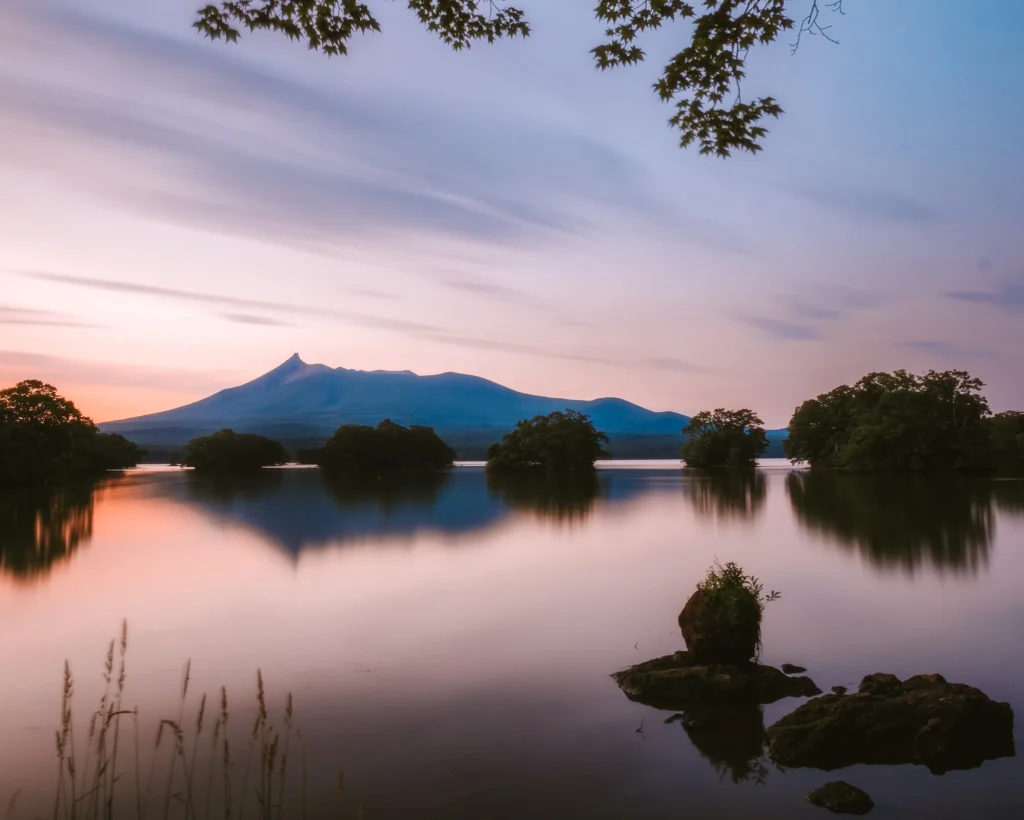
My favourite spot so far is the island with the Thousand Winds Monument. You can frame Mt. Komagatake behind small islands, and if the lake is calm, get clean reflections. I’ve shot it at both sunset and sunrise.
So far sunset has given me the best colour, but I still think sunrise has more potential — the light hits the mountain more directly if the clouds behave.
There are more quiet locations along the lake away from the town too, especially if you want cleaner, less touristy compositions.
Early Autumn – Islands Painted with Colour
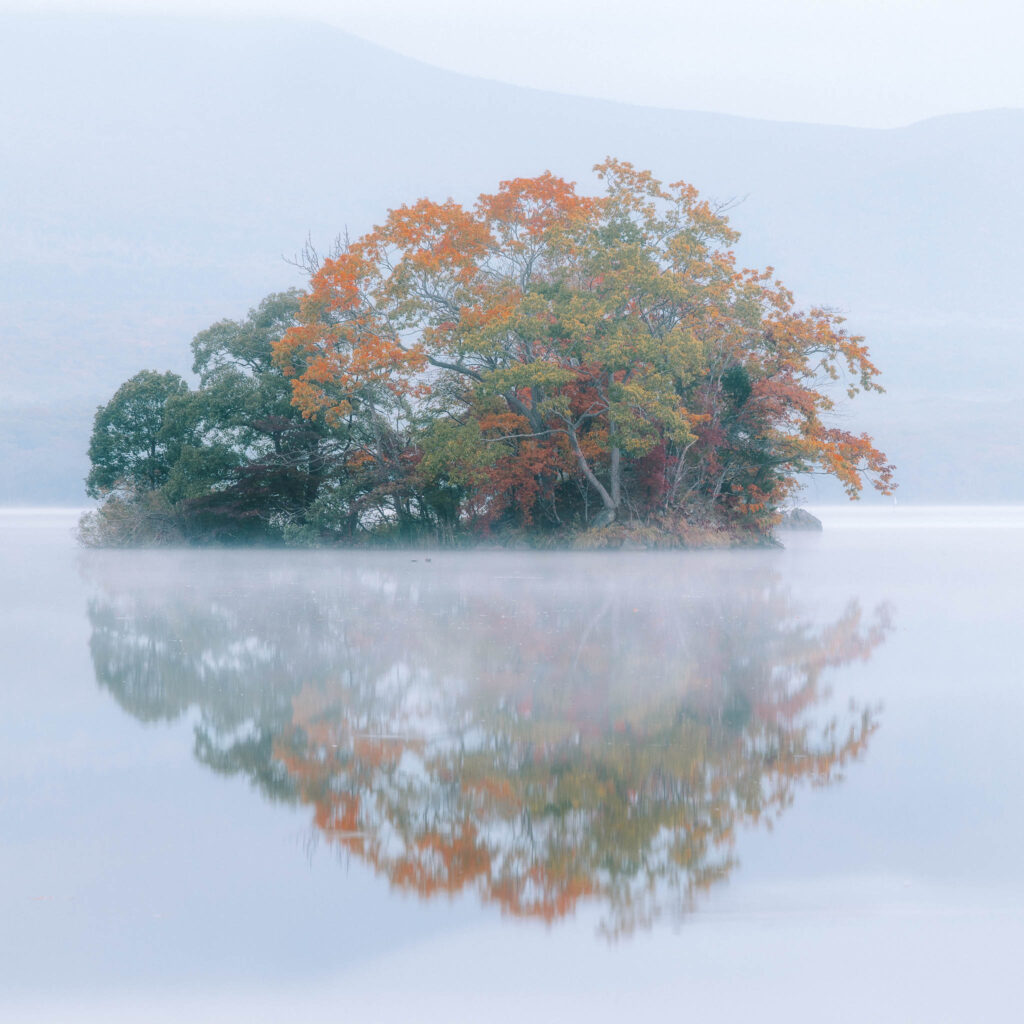
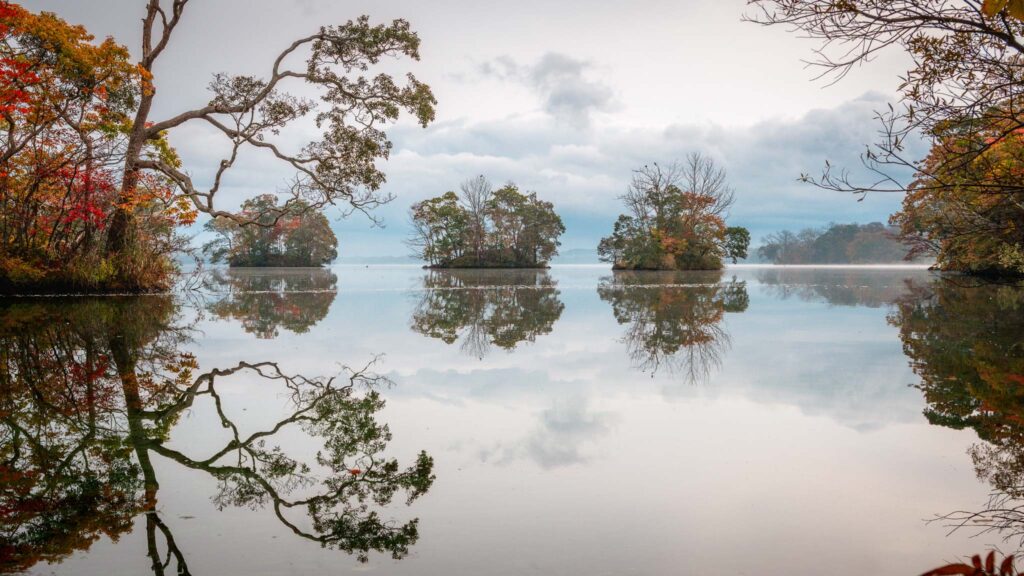
I returned again in late October. Autumn arrives a little later here than the rest of Hokkaido, and the colours around the islands were incredible. Mt. Komagatake was clouded over at sunrise, so I focused on minimalist island scenes instead. Even without the mountain, it was a great morning to shoot.
Photography Notes
For all my trips here I used the Nikon Z 24–120mm f/4 on my Nikon Z8 and honestly it’s perfect for Onuma.
At the wide end, it’s great for capturing multiple islands with Mt. Komagatake in the background.
At 120mm, you can isolate individual islands and simplify the scene nicely. It’s basically the ideal single lens for Onuma.
I also sometimes bring my Nikon 300mm f/4 PF, which is super light and small for a 300mm lens. It’s great when I spot birds around the lake, and paired with the Z8 in crop mode it gives plenty of extra reach without having to carry my bigger wildlife lenses. It’s a good middle-ground option for places like this where you might want landscapes and a bit of wildlife without hauling a huge kit.
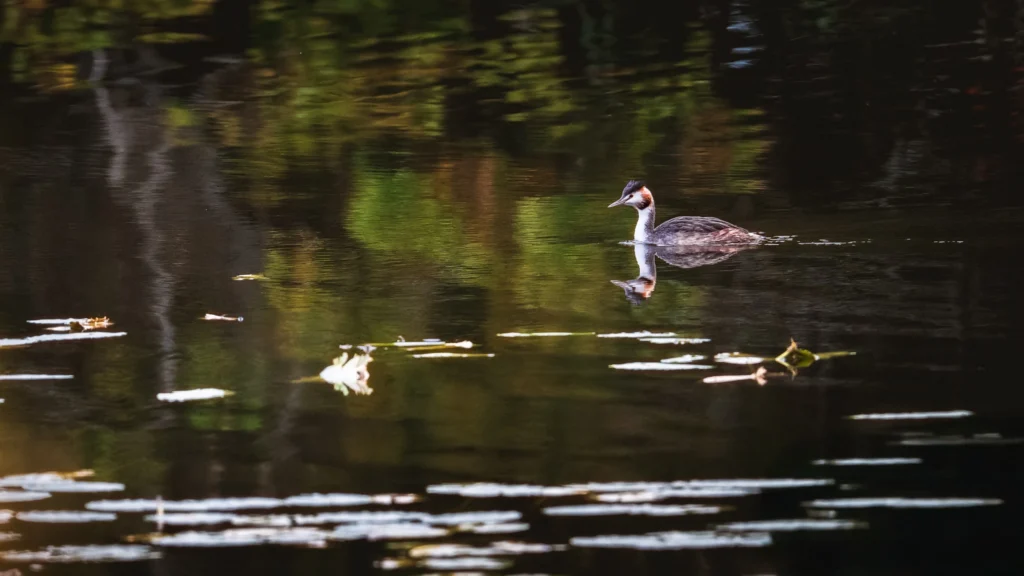
Wildlife Around Lake Onuma
Onuma has a surprising amount of bird life. On my visits I’ve seen great crested grebes, herons, ducks, and sometimes cormorants drying their wings. Kingfishers are also known to hang around the bridges and channels.
In winter I really want to come back to see if any eagles show up here. Steller’s and white-tailed eagles are much more common further east in places like Shiretoko, and I wrote a blog about photographing them there, but Onuma is so much closer to me that I’m hoping it might be a good local option without needing a long drive
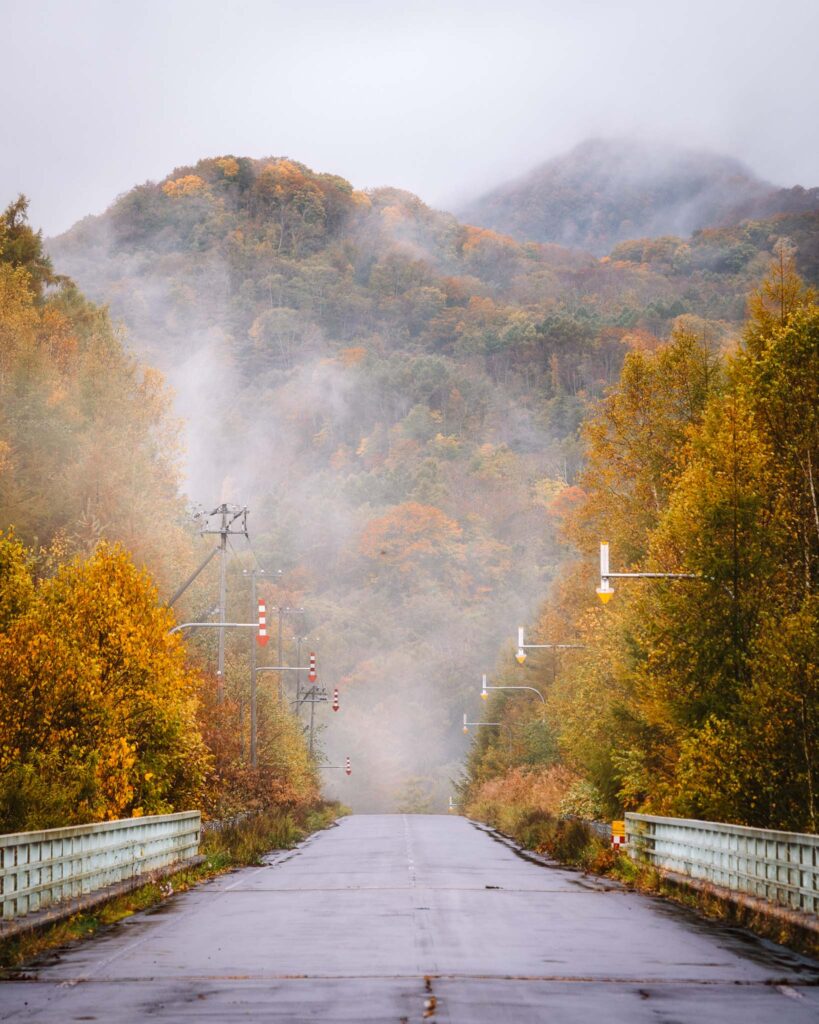
A Side Adventure: Torizaki Valley
About 40 minutes from Lake Onuma is Torizaki Valley (鳥崎渓谷 / Torizaki Keikoku) — a narrow, remote-feeling valley with incredibly clear water and steep forested slopes. The road winds deep into the mountains and eventually leads toward the Kamiiootaki Falls, which is one of the “Eight Scenic Spots” of the valley.
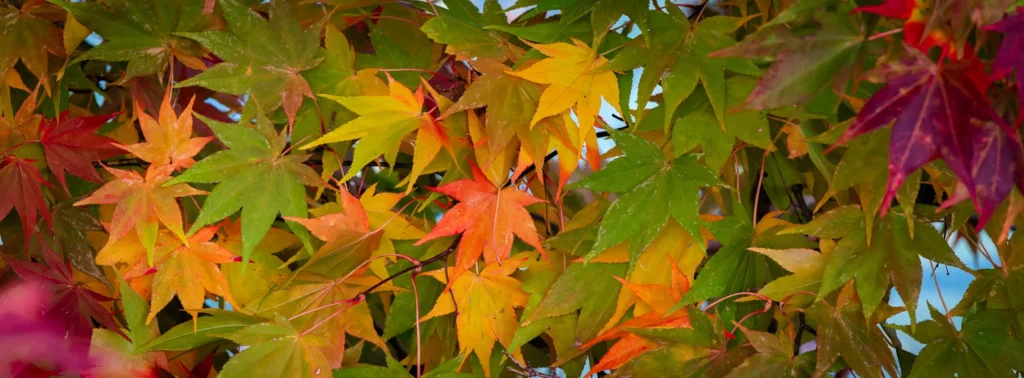
When I drove up here in autumn, the colours were stunning — deep yellows and reds lining the river, and mountains rising around it. It feels completely different from Onuma: quieter, wilder, and almost untouched.
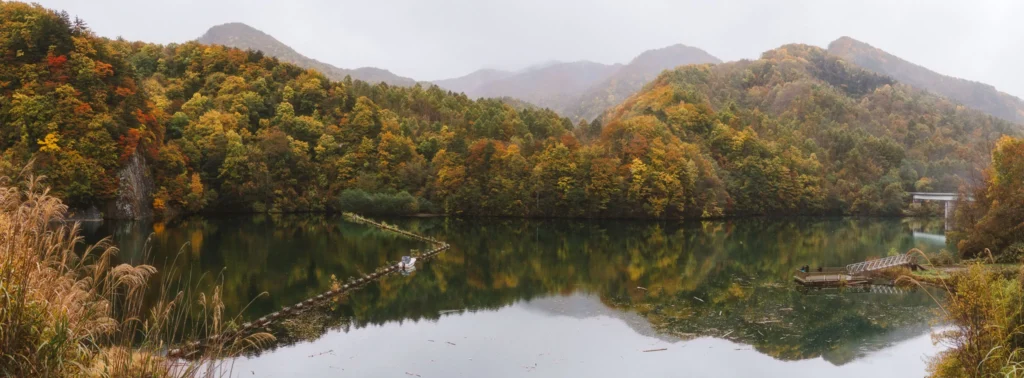
I drove all the way to the start of the waterfall trail, and I really wanted to hike it and photograph the falls. But being alone in a valley like this didn’t feel smart. This is genuine brown bear country, and you can feel how isolated it is the moment you get out of the car. With no one else around, I wasn’t brave enough to push deeper into the forest.
I still want to get to the waterfall one day though — especially in autumn. It looks like an amazing spot for photos. I just won’t go alone without bear spray and someone else with me.
Final Thoughts
Lake Onuma is one of those places I keep wanting to return to. Every season looks different, the compositions change with the light, and even though it’s close to Hakodate it still feels calm and easy to shoot. With Torizaki Valley just up the road, it’s a great area to spend a day or two exploring if you like mixing landscapes, quiet forests, and the occasional wildlife sighting.
1I’m slowly building a bigger collection of these guides as I travel and photograph more parts of Japan. If you want to follow along, I’ve also put together a Hokkaido photography Guide map with the locations I’ve shot so far — including Lake Onuma, Torizaki Valley, and a lot of spots across the island. I update it as I go.
If you enjoy this kind of thing, you’re welcome to join my email list so I can let you know when new guides are out. And feel free to explore the rest of the blog — I’m trying to create something useful for anyone who loves photographing nature in Japan, or who just enjoys following the journey