My Camera Gear Story — and Why There’s No “Best” System
Affiliate Disclosure
Some links on this page are affiliate links. This means I may earn a small commission if you purchase through them, at no extra cost to you. I only recommend gear I’ve used myself or genuinely believe is good value.
I’m often asked what camera I use, what camera someone should buy, or why I chose one system over another. Rather than give short answers that never really explain anything, I wanted to write this post as a longer look at the gear I’ve used over the years — and more importantly, why I chose it.
This isn’t a “what’s best” guide. Budget, value, and how a camera fits into real outdoor use played a big role in every decision I made. Looking back, none of my choices were about chasing the biggest sensor or the most expensive gear — even if that’s where I eventually ended up.
The Beginning: A Small Camera and a Big Spark
My first real camera was the Nikon J1. It was tiny, very underrated, and absolutely not what most people would have recommended at the time.
I had just moved to Niseko and was consuming a lot of ski photo and video content. One film in particular — Into the Mind by Sherpas Cinema — completely changed how I looked at skiing. It wasn’t just about speed and tricks; it was about landscape, scale, and atmosphere. Skiing felt like a way of moving through nature rather than dominating it.
I wanted to try capturing something like that.
At the time, most pros were using big, expensive DSLRs. I wanted something smaller that I could take skiing and hiking, something affordable, and something fast enough for action. Mirrorless cameras were just starting to become interesting, so I went to Sapporo to see what was available within my budget.
The J1 stood out because it was small, cheap, and fast. The sensor was small and the image quality wasn’t amazing, but it could shoot quickly, and that mattered for skiing. I accepted the compromises because the camera fit my life.
What mattered more than specs was that it got me shooting.
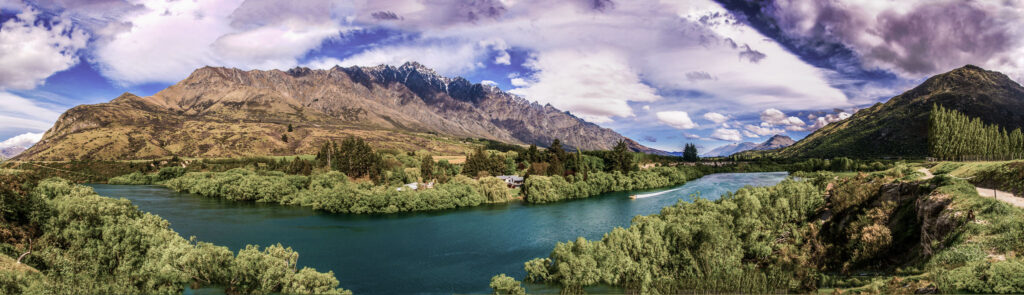
Back in New Zealand, while working in Queenstown, I remember taking a series of photos of The Remarkables looking over the Kawarau River. I wanted to try making a panorama, so I shot a sequence of images and stitched them together later on the computer.
Looking at that image now, the processing is awful — heavy-handed and completely lacking restraint. But watching it come together on the screen at the time was the moment something really clicked. Taking the photos was enjoyable, but seeing a final image slowly reveal itself, even one that I’d now happily rip apart, was something else entirely.
Up until then, most of the satisfaction I got from being outdoors came from action — skiing steep lines, riding fast, pushing limits. The reward was immediate and intense, but short-lived. Landscape photography gave me a different kind of payoff. It was quieter, slower, but somehow deeper.
Ski photography was fun, but landscapes felt more immersive. Instead of reacting to movement, I was paying attention to light, weather, scale, and how a place felt. I realised I could get a similar sense of engagement and reward simply by being present in nature, without needing speed or risk. That shift stuck with me.
Olympus: Where Things Became Serious
After a while, the limits of the Nikon J1 became obvious. I wanted something more rugged and weather sealed for hiking and skiing in bad conditions, and I really wanted a proper viewfinder for bright snow. Image quality mattered more now, but I still wasn’t interested in carrying a big DSLR system.
That led me to Olympus and Micro Four Thirds.
My first Olympus body was the OM-D E-M5. It felt like a big step forward: solid, weather sealed, and capable enough to take anywhere. The image quality was a clear improvement over the J1, and for landscapes it was more than good enough. Just as importantly, it was still small and light, which mattered for travel, hiking, and skiing.
I paired it with the 12–40mm f/2.8 Pro (current version), and that lens really changed how I felt about camera gear. It was my first proper “pro” lens — metal build, weather sealed, sharp, and confidence-inspiring. Compared to the plastic lenses I’d used before, it felt like a tool rather than a gadget.
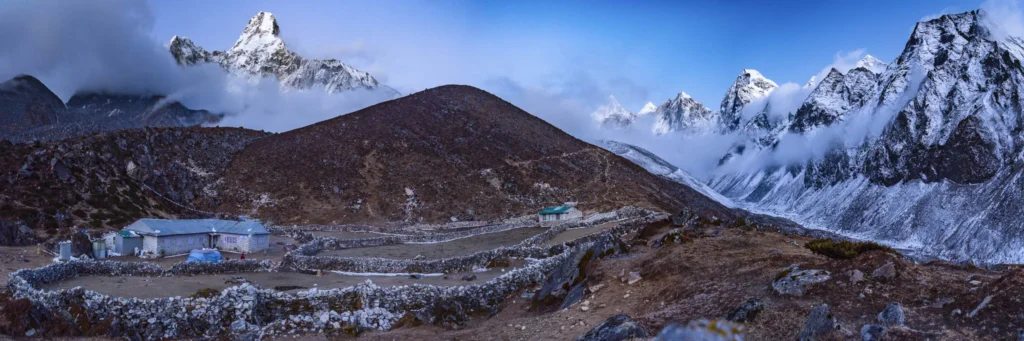
I took that setup everywhere: hiking in Nepal, travelling through Southeast Asia, and skiing in New Zealand and Japan. For landscapes and general outdoor photography it worked brilliantly. Where it struggled was skiing. Autofocus and burst performance were usable, but inconsistent, and I often found myself hitting the buffer at the wrong moment. A lot of what I learned about timing, positioning, and settings for skiing came later — something I’ve written about in more detail in my ski photography tips and techniques post.
Still, for the price I paid and what it allowed me to do, it was excellent value and taught me a lot.
Olympus Pro Glass and Refinement
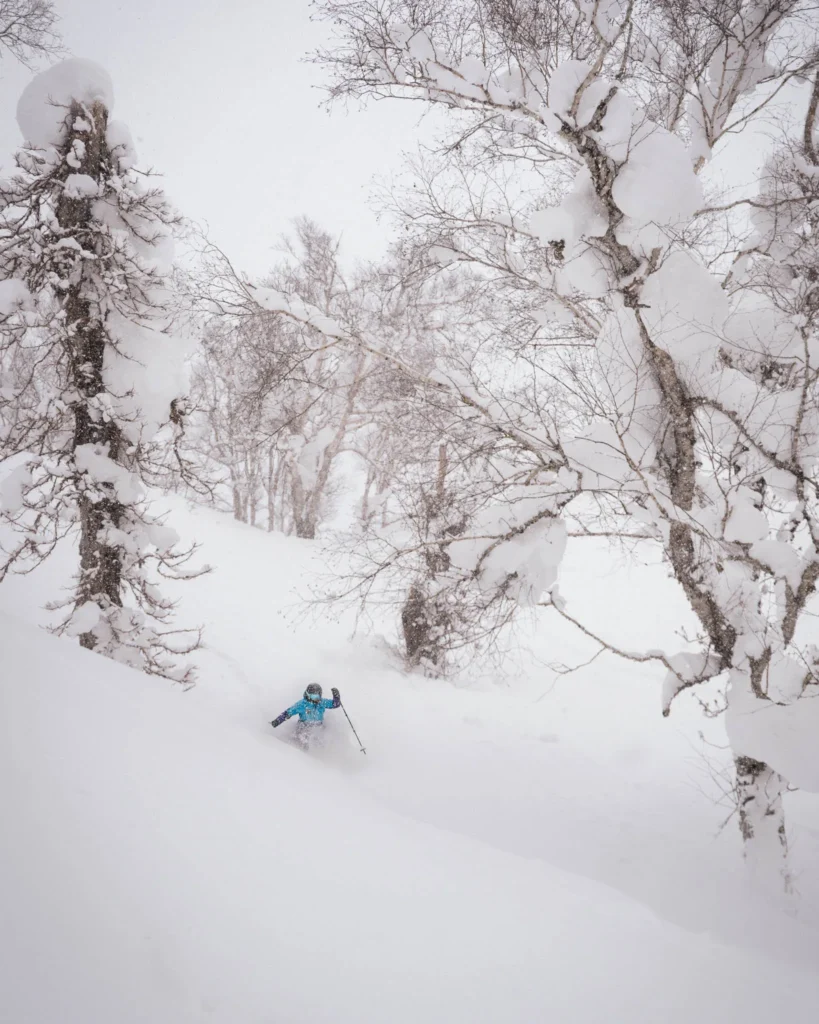
As I shot more skiing, lenses started to matter more than bodies. The standout was the 40–150mm f/2.8 Pro, which became my favourite skiing lens I’ve ever owned. The focal range was perfect for how I shot, the autofocus was reliable, and the balance of size, reach, and image quality was hard to beat. I also loved the manual focus clutch — pulling the ring back to snap into manual focus felt deliberate and mechanical in a way I still miss.
When speed started to matter more, I upgraded to the E-M1 Mark II. This wasn’t a change in direction, just a refinement. It was faster, more reliable for bursts, and let me keep using the lenses I already trusted — which made a lot of sense from a value perspective.
It’s also worth saying that the E-M1 Mark II is the best-feeling camera I’ve ever used. The ergonomics fit my hands perfectly. Everything was where I expected it to be, and it never felt like it got in the way of shooting.
For a long time, this Olympus setup made complete sense for how I worked.
Wanting More (and Giving in to Curiosity)
Eventually, curiosity crept in — not because Olympus had failed me, but because I wanted to see what else was out there. After years of hearing how much better other systems were supposed to be, I wondered if I was missing something.
At that point, it wasn’t about changing how I shot or chasing a different look. I simply wanted to know whether newer cameras could give me a higher hit rate and make shooting fast action feel easier.
That curiosity, more than dissatisfaction, is what pushed me to try something different next.
Fujifilm: On Paper, a Leap — In Practice, Just Fine
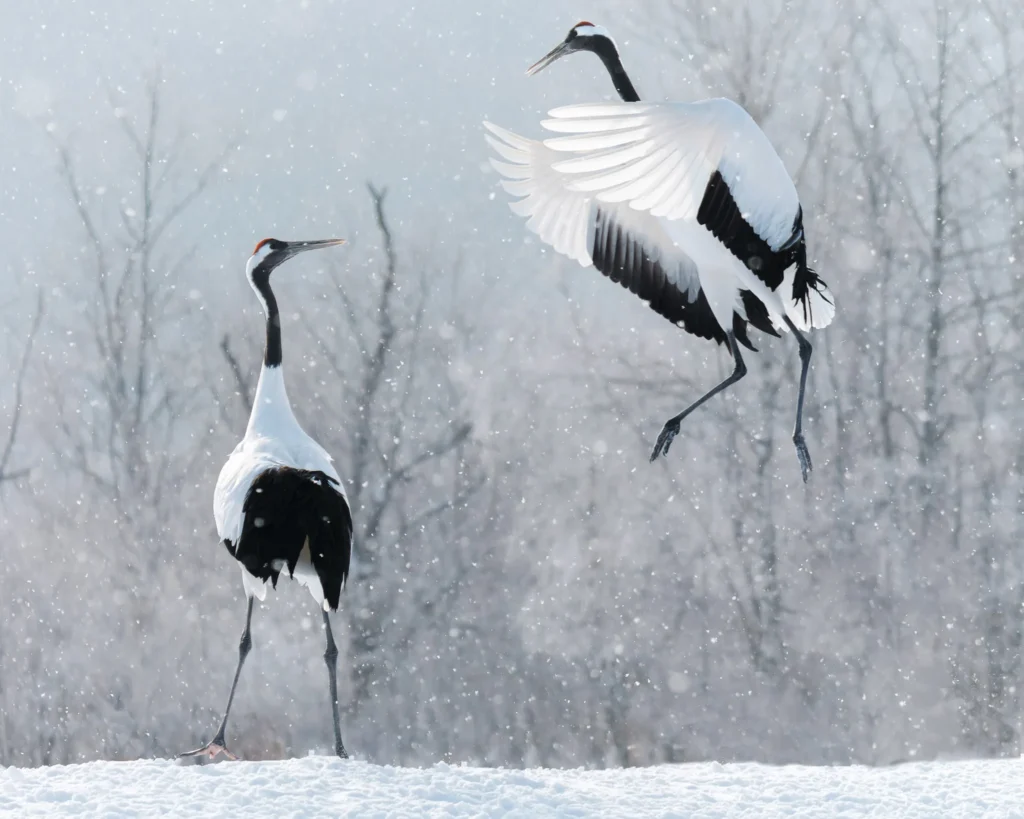
When Fujifilm released the X-H2S, it looked like the answer. Faster autofocus, modern features, and a stacked APS-C sensor. Full frame was still out of reach budget-wise, but this felt like a meaningful step up.
I traded in my Olympus kit and built a practical Fuji setup around skiing, wildlife, and landscapes. On paper, everything made sense.
In practice, it was… fine.
The image quality was good, but not dramatically better than what I’d been getting before. Autofocus was capable, but my real-world hit rate didn’t improve as much as I’d expected. I found myself using similar workarounds to what I’d used on Olympus.
Some things frustrated me more than I expected. The Tamron zoom I used early on showed durability issues far sooner than any Olympus Pro lens ever had. Fuji’s own lenses were optically good, but they didn’t feel as robust or as well thought-out for harsh outdoor use. And for skiing specifically, nothing really replaced the range and usability of that Olympus 40–150mm.
It wasn’t a bad system — it just didn’t feel like progress.
That gap between expectation and reality mattered.
Nikon Z8: Choosing a Tool That Gets Out of the Way
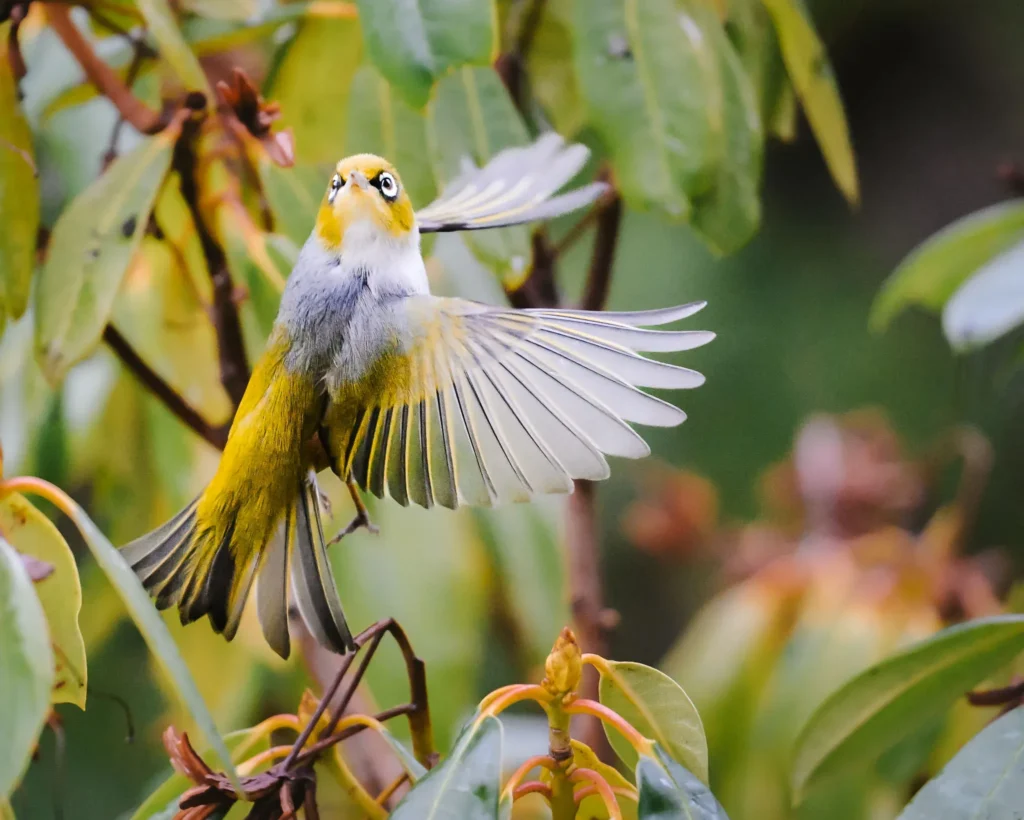
At that point I had a choice: accept “good enough,” go back to Olympus, or finally step into full frame.
I looked at everything. Canon and Sony were either too expensive or impractical for me in Japan as they didn’t change to English unless I paid more. Nikon, surprisingly, offered the best value — especially on the used market — and the Nikon Z8 checked boxes I’d been circling for years: autofocus reliability, durability, resolution for cropping, and performance that didn’t need excuses.
Yes, it’s bigger. That was something I’d avoided for a long time.
But once I started using it, the trade-off made sense. My hit rate improved noticeably. The files were cleaner and more flexible. I stopped feeling the need to run every image through extra software just to get results I liked.
For the first time in a while, the camera stopped being something I had to manage.
I won’t list all my lenses here — I keep my current kit updated on my gear page — but the key point is that I built the system around value, mixing used Z-mount and older F-mount lenses where it made sense. Nothing was bought just because it was new or expensive.
What This All Taught Me
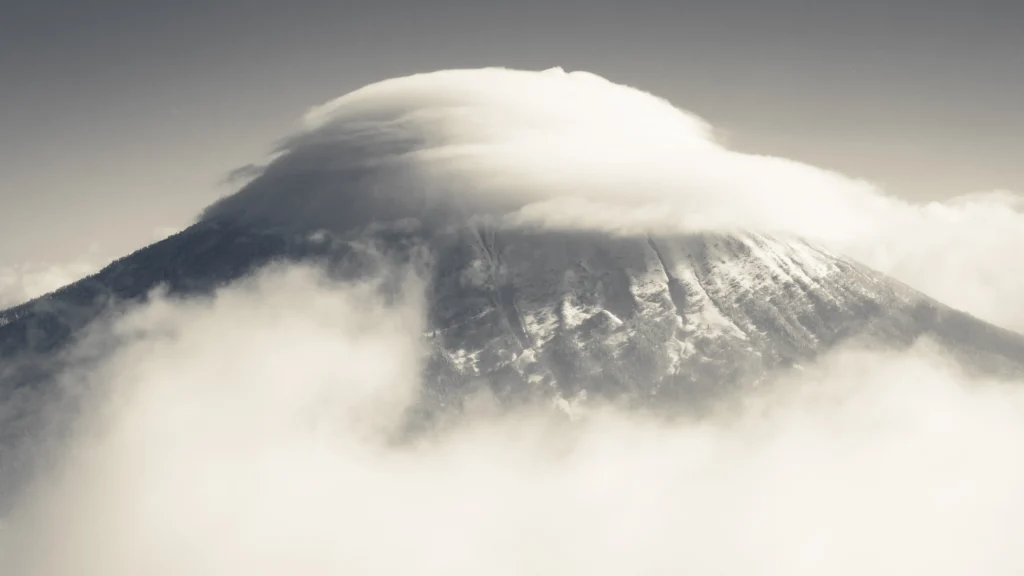
Looking back, I jumped across almost every sensor size there is: 1-inch, Micro Four Thirds, APS-C, and now full frame.
Is full frame better? In some ways, yes — especially for noise control, autofocus, and cropping flexibility. Is it vastly better for everyone? No.
If Micro Four Thirds offered the same autofocus performance and I didn’t need to crop as much for wildlife, I’d happily still be using it. The price jump is large; the real-world gain is often smaller than people expect.
There is no best system. There is only the system that fits your needs, your budget, and the way you actually shoot.
One Last Thing
I haven’t talked about film here — deliberately. Film didn’t enter my photography as an upgrade, but as a counterweight: a way to slow down and separate seeing from performance. That’s a different story, and one I’ll get to another time.
Looking back, yes — I’d do some things differently. But I’m happy with where I am now. Every step taught me something, and none of the cameras along the way were the “wrong” choice.
That, more than any spec sheet, is what matters.
If this way of thinking about photography makes sense to you, you’ll probably find the rest of the blog useful too. It’s where I write about landscapes, wildlife, skiing, and time spent outdoors.